Scientists working to create hantavirus vaccine

 Laurie Lapworth (University of Bath)
An international team of scientists is working to create a vaccine against a virus suspected of killing three people on a cruise ship in the Atlantic.
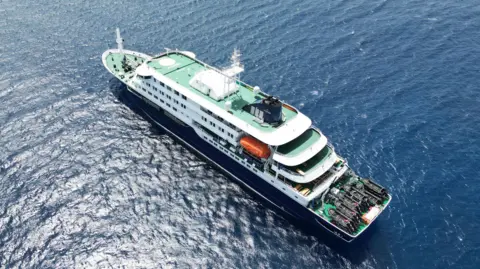
The MV Hondius set sail from Argentina last month, with three cases of hantavirus, typically spread by rodents, since confirmed on the ship and more suspected.
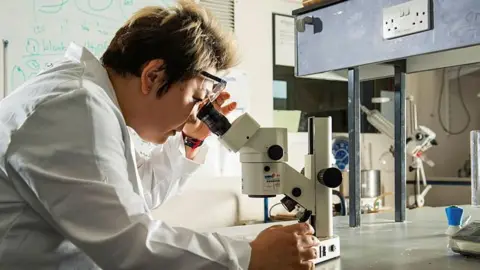
Chemist Professor Asel Sartbaeva, from the University of Bath, is part of the team involving experts in the United States and South Africa currently working on a vaccine.
"Obviously, developing a vaccine would be amazing because then we can prevent instances of this disease happening or at least mitigate the really bad consequences of the infection," she said.
In its latest update, the WHO said eight cases of hantavirus - three confirmed and five suspected - have so far been identified in people who were on the ship.
The origin of the outbreak is still unknown and it is not known if people other than passengers from the ship have been infected.
 Getty Images
Officials have said that one of the three deceased had the virus, while the other two deaths are under investigation.
One of the three deaths was a Dutch woman who left the MV Hondius when it stopped at St Helena on 24 April, and travelled to South Africa where she died two days later.
Her husband died on board on 11 April, but is not a confirmed case of hantavirus.
The third fatality - a German woman - is not yet a confirmed case either.
Transmission of hantavirus between people is rare, and both the WHO and the UK Health Security Agency have said the risk to the public is low.
There is no specific treatment for hantavirus infections - but early medical support can improve survival.
The type of care recommended can include oxygen therapy, mechanical ventilation and even dialysis, and patients with severe symptoms may need intensive care treatment.
'Delivery by drone'
Currently many vaccines can only be transported at freezing temperatures, but Professor Sartbaeva and the team, who started work on the current vaccine prior to the MV Hondius outbreak, want to change that with a method called ensilication.
"It's a new technology which I've been developing within my group for over 15 years now," she said.
"Insilication is a new groundbreaking method for encasing vaccines with very tiny layers of inorganic material to make them thermally stable...
"So what we've been doing is that our group in Bath has been working with other two groups, one in Texas, who have developed the antigen against the hantavirus, and a group in South Africa with a company called Afrigen.
"We've been putting the thermal stabilisation on top of it to make that vaccine resistant to temperature changes so that we can do, for example, drone deliveries."
Professor Duncan Craig, dean of the Faculty of Science, said: "The University of Bath is extremely proud of professor Asel Sartbaeva and her team for leading groundbreaking research, which is internationally renowned for its innovative approach to vaccine development."
Follow BBC Somerset on Facebook and X. Send your story ideas to us on email or via WhatsApp on 0800 313 4630.
