Historian brands museum's Dickens guidance 'ludicrous'

 BBC
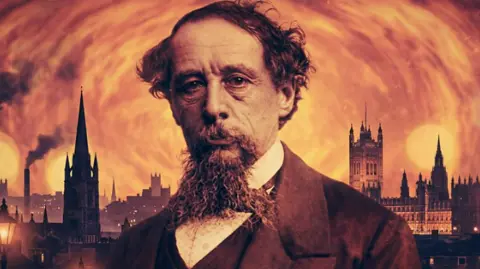
BBCMuseum guidance advising staff how to address Charles Dickens' views on race and empire has been branded "ludicrous" by a local historian.
Employees at Rochester's Guildhall Museum received advice on responding to visitors' questions about the author's opinions, despite no complaints being recorded.
The guidance suggests staff should acknowledge Dickens held views that "can cause great offence today" and distance the museum from any considered "particularly upsetting".
Medway Council, which runs the museum, said the aim was "not to diminish his importance, but to ensure staff are equipped to address historical issues accurately and sensitively where they arise in conversation with visitors".
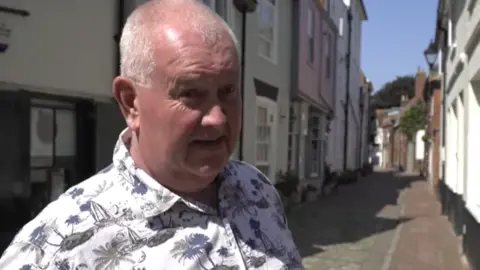
Local historian Shane Waterman, who has led tours of Rochester for a decade, said: "Comparing his views from 170 years ago to today is really ludicrous."
He added that Dickens, who spent his childhood in the city and died nearby in 1870 at age 58, was widely regarded as progressive in his own era, pointing to his championing of the poor and liberal political stance.
The guidance relates to Rochester museum's permanent Making of Mr Dickens exhibition, which was opened by Queen Camilla in 2022.
 LDRS
LDRSAn internal memo said Dickens supported the Empire, believing it was "the best way to make the world more like white, middle-class England" and "made a link between race and moral worth" in parts of his work.
It references the comments Dickens, whose works include Oliver Twist and Great Expectations, made after the Indian Mutiny of 1857, when thousands of Britons were killed and he called for retribution.
Waterman said: "Some of these views, which are often quoted, are taken out of context. A lot of them centre around his sending of his own son, Walter, to India in 1857.
"Time moves on, we learn from things."
He added that Dickens' private letters reflected the fears of a concerned father during a violent period rather than defining his overall legacy.
Museum bosses also highlighted passages where Dickens mocked foreign customs and linked race to moral worth in parts of his work.
The guidance states: "Today we reject his views, but even at the time, there were a number of important figures who argued for the universal worth of all people and cultures, regardless of race or background."
'Warts and all'
Residents in Rochester, which inspired scenes and locations in Great Expectations and The Mystery of Edwin Drood, were defensive of the cultural icon.
Lorna Povey said: "I just think it's all gone a bit mad, to be honest," adding that people should not judge historical figures solely by modern standards.
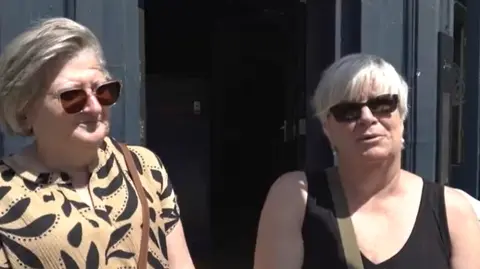
Sue Knight and Christina Smith agreed it was "silly" to try and undermine something which, in some ways, defines Rochester.
Knight said: "Things he was writing about are still relevant today, and Dickens is a big part of what the high street celebrates."
 LDRS
LDRSFred Riper, said it was right to present "warts and all" accounts of well-known figures while still celebrating their achievements.
He said: "We can understand he was from a different time and know he believed differently to us, but why shouldn't we see all of him? He's a famous author.
"I think you have to accept it. I don't think we can rewrite what has gone on in the past just to bring it in line with what certain people say or do today."
Dickens remains closely associated with Medway, where his life and work continue to attract tens of thousands of visitors each year.
Follow BBC Kent on Facebook, on X, and on Instagram and listen to BBC Radio Kent on Sounds. Send your story ideas to southeasttoday@bbc.co.uk or WhatsApp us on 08081 002250.
