Woman's life 'saved' after hug from her mother
 BBC
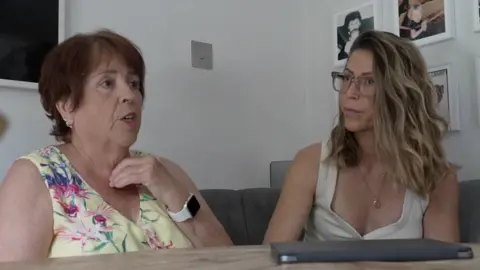
BBCA woman who was told by her doctor that a lump in her breast was harmless says her life was probably saved after a hug from her mother.
Selina Moss-Davies, from Rochester in Kent, said she felt "no real rush" to get the lump sorted, but was urged to get a second opinion after her mother felt it during a hug.
A second doctor found that the four-centimetre tumour in Selina's breast was an aggressive, grade three, triple negative breast cancer.
She began treatment immediately but was told she would need further testing due to a potential "faulty" gene in her family.
"The doctor started talking about genetic testing, because of my paternal grandmother," Selina said.
"They mentioned the faulty BRCA gene. I'd never heard of it and didn't know what they were talking about. In some ways, that was bigger than the breast cancer."
According to the NHS, a faulty BRCA1 or BRCA2 gene increases the risk of getting breast, ovarian or prostate cancer.
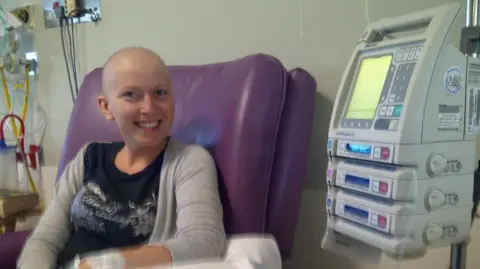 Selina Moss-Davies
The health service says around 70% of women with BRCA1 or BRCA2 mutations will develop breast cancer by the age of 80.
Six weeks after her tests, it was confirmed that Selina, then 28, did carry the faulty BRCA1 gene mutation.
But the chemotherapy had worked, and the tumour in Selina's breast had shrunk dramatically.
She then had a double mastectomy and breast reconstruction.
"It was a choice, and a serious one, but I knew I had to go for the double mastectomy," she said.
At the time of her diagnosis, Selina was five months into a new relationship with her partner, Colin.
The couple are now married and have two children.
Selina, now 43, said she carries guilt about potentially passing the gene on.
But she added: "Thankfully, because of the work that Cancer Research UK did to identify the gene, the next generation can now be tested and be ready for any future decisions that might have to be made."
The family will be taking part in Cancer Research UK's Race for Life in Maidstone on 5 July.
Follow BBC Kent on Facebook, on X, and on Instagram. Send your story ideas to southeasttoday@bbc.co.uk or WhatsApp us on 08081 002250.
