The friends who bought a derelict fort

 BBC
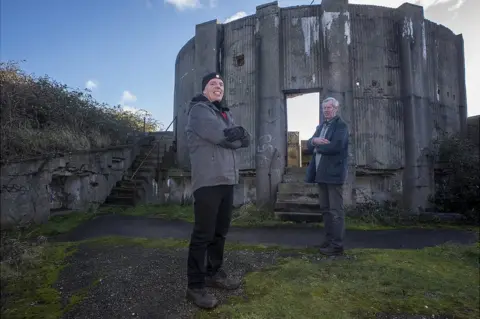
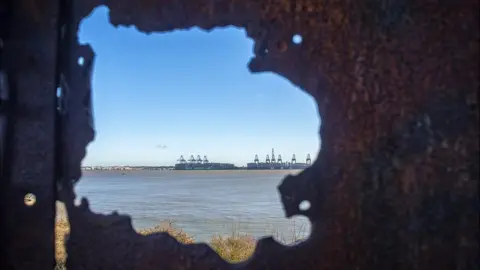
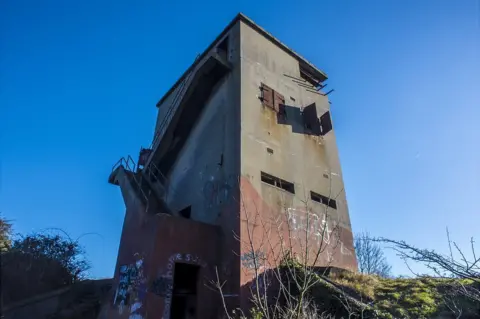
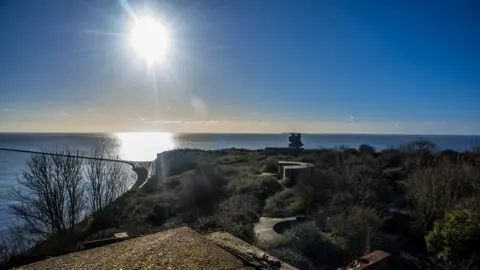
BBCBeacon Hill Fort was once a testing ground for prototype weapons designed to keep England safe from potential invaders. Long since abandoned, this sprawling five-acre complex at the end of a dirt track in Harwich has now been bought by a pair of friends who want to turn it into a major attraction.
A love story lies at the heart of how Paul Valentine and Barry Sharp came to own their very own fort.
About 45 years ago, the estate agent and his then-girlfriend would spend time together on the grounds of Beacon Hill Fort, whose giant guns once stood guard out over the sea.
More than four decades later, while visiting his former flame, he was reminded of their trips to the now-derelict site when he spotted plans for the fort there on her table.
 BBC
BBC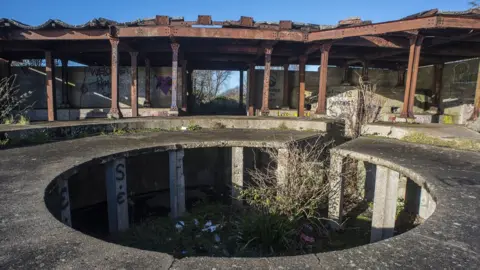 BBC
BBCHer family had inherited the site and had an offer in for it from Tendring District Council.
"I told her there and then I would double whatever they were offering," said Mr Valentine.
 BBC
BBC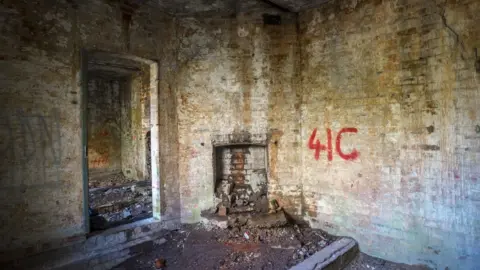 BBC
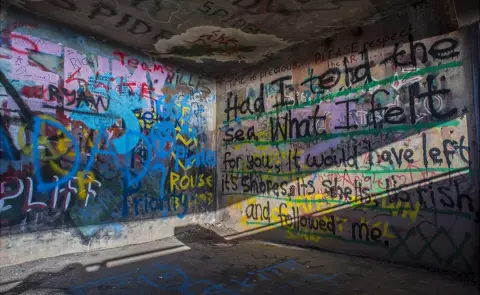
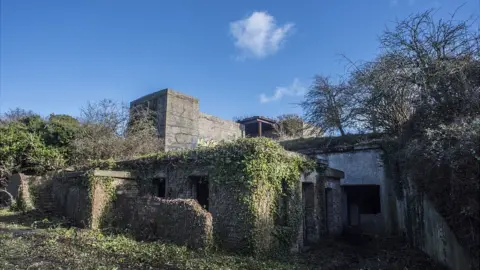
BBCEventually a deal was struck and Mr Valentine and Mr Sharp, a retired car restorer, became owners of a hugely overgrown plot, peppered with 25 separate buildings, a warren of underground tunnels and debris left behind by generations of trespassers.
The plot, which dates back to the Tudor period, was the first testing ground for "invisible" defences.
Before 1889, coastal defence batteries were meant to be seen by the enemy. But their near monumental presence also made them easy targets for bombardment.
Beacon Hill is thought to be the first battery to employ guns mounted on carriages which would rise to fire and then disappear down into their pits.

You might also be interested in
Mr Valentine and Mr Sharp, who are still discovering new buildings on the site, want to refurbish the complex - a designated scheduled ancient monument - into an adventure attraction, possibly aimed at school groups.
"We want to create something that will really put Harwich on the map, that will create new jobs and protect this part of our history," said Mr Valentine.
"It would be great to be able to open it up for people to visit, explore and enjoy. Eventually, we would like to create some kind of heritage trust and to give this site back to the people of Harwich."
 BBC
BBC BBC
BBCA brief history of Beacon Hill Fort
 BBC
BBC- The first fortification at Beacon Hill Fort was built in the 1530s during Henry VIII's reign
- The original Beacon Hill battery from 1889-90 included 10in (25cm) and 6in (15cm) breech-loading guns which popped out of their encasements to fire
- By World War One, the original guns had been replaced by mounted 6in guns and a third emplacement was built on the northern side of the fort
- After 1945, the fort was put into "reduced" status by the War Office
- The battery was finally abandoned in 1956, when military jet aircraft and missile systems rendered coastal defences, in the view of the War Office, obsolete
Source: Tendring District Council
 BBC
BBC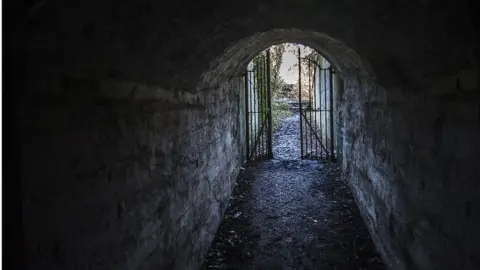 BBC
BBC BBC
BBC BBC
BBC BBC
BBC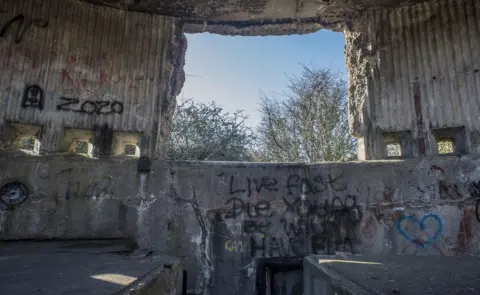 BBC
BBCPhotography: Laurence Cawley
