Museum buys Iron Age hoard found by detectorist

 Cotswold District Council
A "hugely significant" collection of Iron Age coins and miniature weapons that was found by a local detectorist is to appear in a museum.
Corinium Museum, in Cirencester, said the hoard of objects dating back to the 1st Century BC when Celtic tribe the Dobunni lived in Gloucestershire, Bristol and northern Somerset before the Roman invasion of Britain.
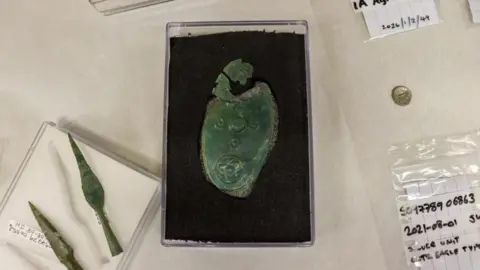
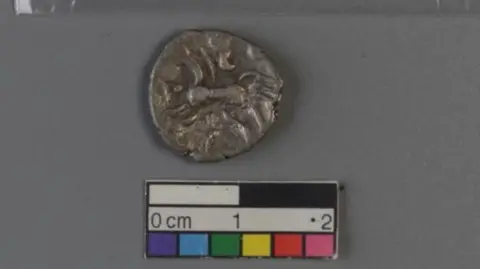
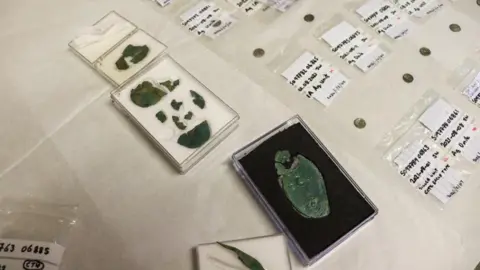
More than 160 coins were found by a metal detectorist in Cirencester along with miniature iron and copper-alloy shields and spearheads, which were used as ritual offerings, known as votives.
The museum has acquired the hoard for £13,250 and is now raising a further £25,000 needed to conserve and display the historic objects.
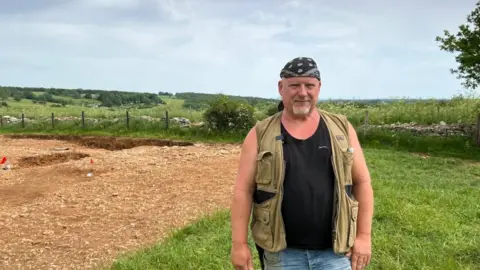
Kevin Houghton found the coins on one of his many detecting sessions in the Cotswolds, which have led to about 500 finds over the years.
"It was just another of those days with another walk and another field, and now we have Iron Age coins coming out of the ground," he said.
"I love to find things that have been lost and forgotten and bring them back into the public eye.
"It's so good to say I've found something spectacular."
An archaeological dig at the site continues to find out more about why the coins and miniature weapons might have been placed there.
 Corinium Museum
James Harris, collections engagement officer, said the hoard provided a unique insight into the life, beliefs, and artistry of the local Dobunni tribe at the transition between the late Iron Age and early Roman period.
"This new acquisition is a complete and well‑preserved group of objects that really brings the past to life and sparks public curiosity," he said.
Many of the coins feature a three-tailed horse motif, which is typical of the Dobunni.
The use of miniature weaponry as an offering in Britain is a practice that appeared about 150BC and continued into the early phases of Roman occupation.
 Cotswold District Council
Emma Stuart, the director of Corinium Museum, said the collection was of "huge significance" and would become the focal point of the Iron Age gallery.
"The Iron Age oppida, or fortified settlement, at nearby Bagendon shows clear evidence of local coin minting," she said.
"The discovery of the unique miniature votive shields and spearheads deepens our understanding of the ritual practices of the period and helps us connect more closely with the past."
Follow BBC Gloucestershire on Facebook, X and Instagram. Send your story ideas to us on email or via WhatsApp on 0800 313 4630.
