'Trenches and big holes' - working at the nuclear dawn

 Chris McHugh / BBC
It was the dawn of the nuclear age - in 1946 the government set up a research site on the use of atomic energy outside the village of Harwell.
Fast forward 80 years and the Harwell Science and Innovation Campus in Oxfordshire now has the UK's largest concentration of national research facilities, including the Diamond Light Source.
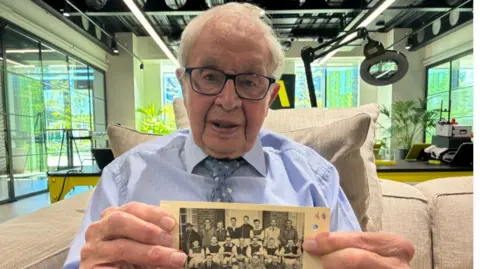
One man who has watched it grow from a post-war outpost to a multi-million pound research centre is Griff Bowen, now 99, who first started working there in 1948.
He has been reflecting on working life on the site - initially known as the Atomic Energy Research Establishment (AERE) - when it was in its infancy.
 Harwell Campus
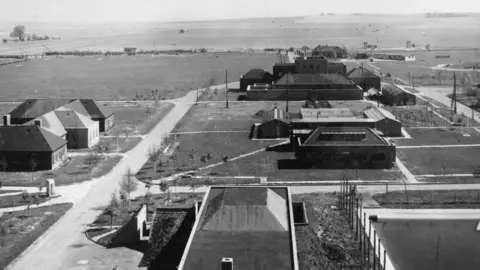
Established after the end of World War Two, it was designed to pioneer civil and military nuclear technology.
A former RAF base, Harwell was in Berkshire at the time and was chosen because its existing buildings and infrastructure made it easier to develop at speed.
At the time Bowen, who had served as a stoker in the Royal Navy, lived in the nearby village of Chilton and was looking for work.
He recalled how he got the job after a "five-minute chat" with the plant's labour officer.
Bowen said: "When I came here it was all trenches and big holes in the ground.
"There were only about 200 of us here."
At the time nuclear power was seen as a new, relatively efficient and clean source of energy.
In 1947, a nuclear reactor known as Graphite Low Energy Experimental Pile - or GLEEP - generated nuclear energy in western Europe for the first time.
Bowen was required to sign the Official Secrets Act and keep his work confidential.
"As time progressed and the role of the campus became more diverse the work at Harwell became less secretive," he said.
"Safety was as important back then as it is today", said Bowen, who was required to wear a dosimeter device - or film badge - to monitor for radiation levels.
 Harwell Campus
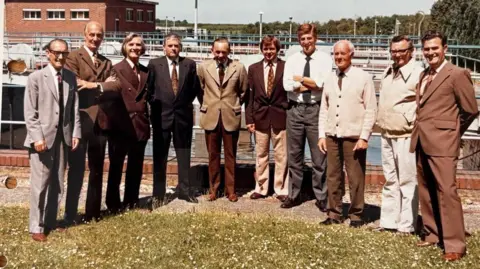
With the country only three years removed from the end of the war, Bowen says the site quickly developed into a close-knit community.
"The camaraderie was great, because most of us were ex-service people.
"Everybody was very friendly at that particular time. We all sort of mixed in and did the best for everybody," he added.
 Harwell Campus
Bowen was responsible for the safe disposal of solid and liquid radioactive waste, and escorting it to different sites - which could take a considerable amount of time.
Waste from the site was treated at the Liquid Effluent Treatment Plant before safe disposal, with some escorted to the Windscale nuclear plant in Cumbria - now known as Sellafield - for storage.
"Back in those days there were no motorways, of course. It used to take us ten hours to get to Manchester, but things have changed now," he said.
Bowen worked his way through different roles but was always part of the same team, responsible for waste disposal.
He was given several promotions and was managing a team of 25 people before retiring in 1990.
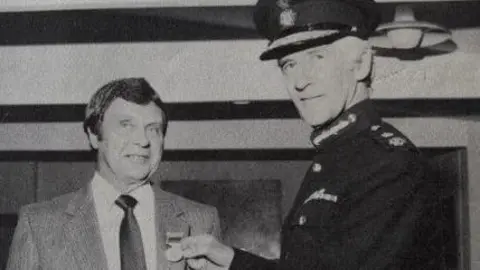
He met the Queen Elizabeth II on two separate occasions - once when she commissioned a building on site and at Buckingham Palace after he was presented with a British Empire Medal for his services.
His daughter Theresa followed him, and is in her 50th year of working on and around the campus.
 Harwell Campus
Bowen said it was the community spirit which kept him on the campus for so many years.
"I knew so many people on site. We helped each other as much as we could.
"A lot of my family were here. My brother worked in transport, my sister worked in the telephone exchange... and my father worked here as well," he added.
Asked whether he had become a celebrity at Harwell from his length of service, Griff politely brushes off the suggestion.
"No, I don't think so. It was just my job and you just carried on. But it was great".
