More than 60,000 trees planted on country estate

 Nick Howard
More than 60,000 trees were planted on the grounds of a country estate over winter as part of its plans to capture carbon and increase biodiversity.
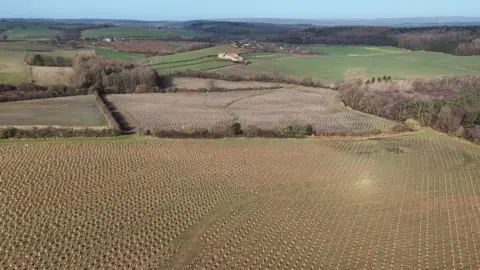
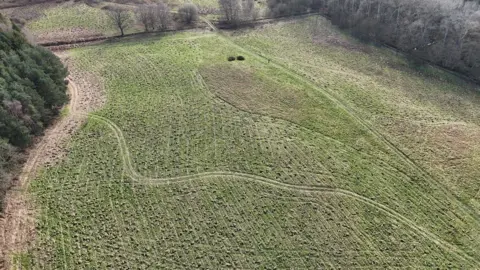
The forestry team at Castle Howard planted 60,978 trees, marking the largest-scale planting on the estate in over 50 years.
All the saplings have come from the Castle Howard Tree Nursery, and are mostly oak, beech, hornbeam, blackthorn and hazel.
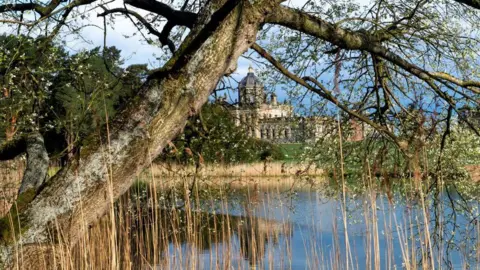
The 18th Century stately home near York - which is one of the sets for Netflix show Bridgerton - has plans to extend its current woodland by 100 hectares over the next five years.
Its plans are supported by the Forestry Commission England Woodland Creation Officer.
The saplings have been planted between the Stray - the 3.7mile (6km) public road that stretches through the estate - and the village of Terrington.
They have also been planted to extend and connect woodlands along Slingsby bank and through Fryton Moor.
This work has been led by Duncan Leckie, Forestry Manager at Castle Howard, with planting carried out by the forestry team, partner contractors and conservation volunteers.
 Castle Howard
Castle Howard's Head of Natural Environment Guy Thallon said: "Woodland creation is a key pillar of Castle Howard's natural environment strategy, extending the existing 1,000 hectares of woodland managed by the estate, and creating the ancient woodlands of the future."
"In the next five years, our goal is to increase our woodlands by 10% by adding 100 hectares to the current 1,000 hectares."
 Castle Howard
He said woodland creation was "critically important" to sequestering carbon as part of global efforts to avoid the worst climate change warming scenarios.
The saplings are protected by natural and biodegradable guards and ties, which can be collected and recycled.
Rainbow, a recycling centre in Hull, has developed specialist recycling capability for the hedgerow spirals, and has supplied the specialist biodegradable guards made from wood and vegetable resin.
This has been supported by funding from the Forestry Commission and the Howardian Hills National Landscape.
Listen to highlights from North Yorkshire on BBC Sounds, catch up with the latest episode of Look North.
