NI fuel protesters 'stand in solidarity' with Irish counterparts

 BBC
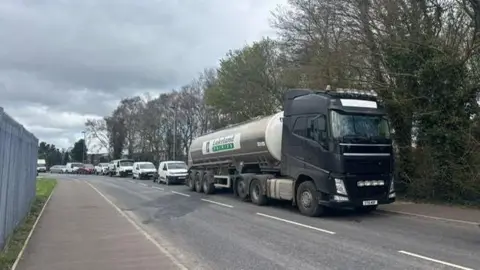
BBCDozens of vehicles have taken part in a slow moving convoy in protest at rising fuel costs in Northern Ireland.
Organisers say they are standing in solidarity with those who are protesting in the Republic of Ireland where hundreds of petrol stations are without fuel due to five days of protests.
A convoy of vans, lorries, tractors, and even a limousine, are taking part in a 'go-slow' around the town centre before crossing the border into Lifford, County Donegal.
One vehicle recovery owner told BBC News NI that his fuel bill increased by more than £5,000 in the past month and he would be taking his lorries off the road from today.
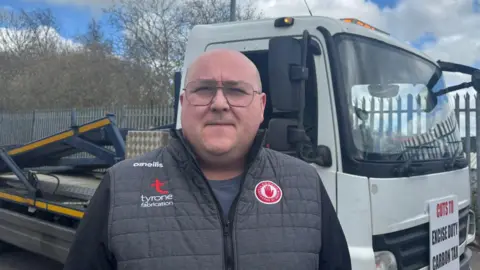
"There's real anger across the whole island of Ireland about rising prices, not only with fuel but the cost of living and the cost of a bag of messages out of the supermarkets," said Michael McLaughlin, one of the protest organisers.
"All other sectors of the economy - manufacturing, construction, hospitality, healthcare, distribution, you name it, all the workers throughout the pandemic kept the lights on.
"All the people who went out, day after day, working to keep the country going - they're the workers who are getting hammered left right and centre every time they go out the front door, go to a fuel pump, go down to the supermarket for a bag of groceries and messages - something has to give."
He said those who had gathered in Strabane had done so to "articulate that anger in the best way we can" and to send a clear message to the "political class that enough is enough".
"We can't go on like this and we hope that they are listening to our message," he added.
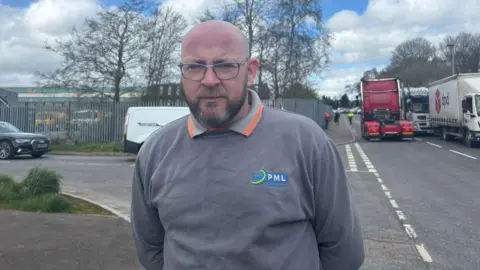
Paddy McLaughlin, who owns a limousine and a vehicle recovery company, said his fuel bill increased by more than £5,000 in the past month and he would be taking his lorries off the road from today.
"We working for nothing at the minute and we can't sustain that," he said.
He said his company would need an "extra 25-30% on they money they are paid to get his lorries back on the road".
"That's what we're losing out, that's our profit, the government's not losing out, they're still making their money."
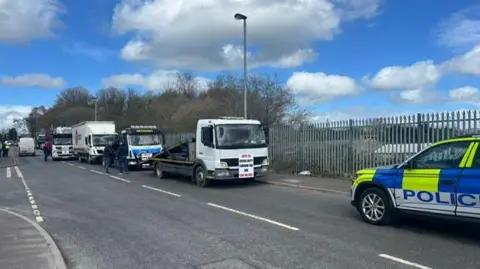
The convoy left an industrial estate just outside the town at 15:30 BST and headed towards the town.
It crossed the Lifford bridge into County Donegal before returning to Strabane.
Many of those attending had signs calling for cuts to fuel bills.
The Police Service of Northern Ireland (PSNI) said it was assessing social media posts calling for planned protests and had prepared a response to minimise disruption and ensure public safety.
The Department for Infrastructure advised people to allow extra time for their journeys should protests go ahead.
Why are fuel costs rising?
The conflict in the Middle East has caused rapid price rises for both petrol and diesel around the world.
Some 20% of the world's oil trade, the raw ingredient for producing both petrol and diesel, has been halted by the closure of the Strait of Hormuz.
In Northern Ireland, petrol increased from 124.8p litre on 26 February to 153.1p litre on Thursday, while diesel prices have gone from 132.6p litre to 185.6p litre, according to the Consumer Council.
On Friday the first and deputy first minister's sent a joint letter to the prime minister calling for the government to intervene on rising costs.
In a statement, Michelle O'Neill and Emma Little-Pengelly said: "Our hauliers, our farmers, and small and medium-sized enterprises are facing sharply increased operating costs too and these costs are inevitably being passed on further, deepening the cost-of-living crisis.
"Families and businesses cannot continue to absorb these sustained increases without intervention."
