Stones unveiled to remember Nazi Occupation victims

 BBC
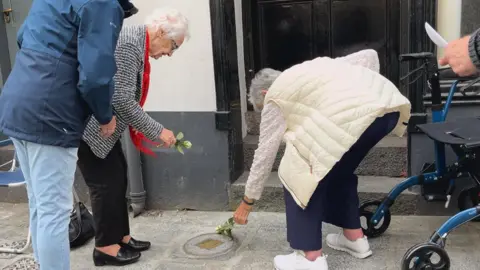
BBCThirteen new commemorative stones have been placed around Guernsey to remember islanders who experienced the Nazi Occupation of the Channel Islands during World War Two.
The Stolpersteine Project was started by German artist Gunter Demnig in 1992, with more than 100,000 stones on display across Europe.
Fifteen of the stones, know as stolpersteine, which means "stumbling block" in German, were originally installed in Guernsey in 2024.
Helen Glencross, head of heritage services at the States of Guernsey, said: "The stones are very much a physical presence on the island, remembering people who suffered at the hands of the Nazi regime during the occupation."

Glencross explained the meaning behind the stumbling stones' name: "As you pass by you sort of stumble," she said.
They 'really did suffer'
"Not physically, just mentally, remembering those people that are recognised on each individual stone."
She said stolpersteines are important to the descendants of commemorated islanders: "The stones are really valued by the families and, of course, these families have stories to tell.
"It's important that we stop and we we listen to these stories and we remember these people, who really did suffer."
One islander who has been memorialised by a stolpersteine is Ernest Stanley Legg.
He was deported to Nazi Germany in June 1944 for his role in Guns, where he stayed until he was liberated from Naumburg Prison in April 1945 by the Americans.
Legg's stolpersteine stone has been unveiled outside the house where he lived, on the Bordage in St Peter Port.
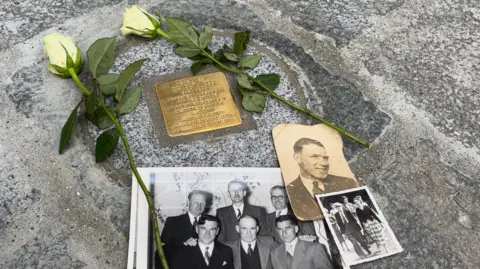
Amanda Hibbs, the great niece of Legg, said: "Ernie was my great uncle, Nurnie, as I used to call him, apparently.
"He passed away when I was about five years old, so I haven't got that many memories but I do remember him being a lovely man."
'Keeping the memory alive'
She said that Guns was "our family story".
"My gran and uncle Ernie and my grandfather, Joe, were involved in Guns. Unfortunately, Joe never came back from prison in Germany".
Hibb's grandfather, Joseph Gillingham, was allowed to say goodbye to his brother-in-law Legg on his release from prison, but was not seen again.
Searches were unsuccessful and he was officially declared dead in 1947.
Gillingham was memorialised by a stolpersteine in 2024.
Hibbs believes the new stone to commemorate Legg will help with "keeping the memory alive and having somewhere now that is a place where you can go and remember."
Follow BBC Guernsey on X and Facebook and Instagram. Send your story ideas to channel.islands@bbc.co.uk.
