Cancer pill's 'precious gift of time' and 'I Dua'

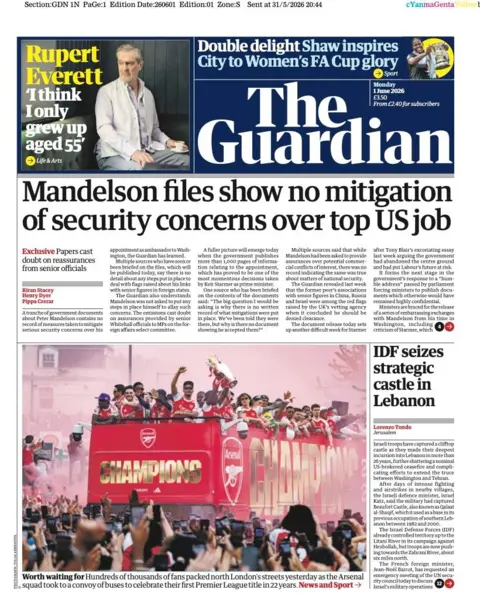

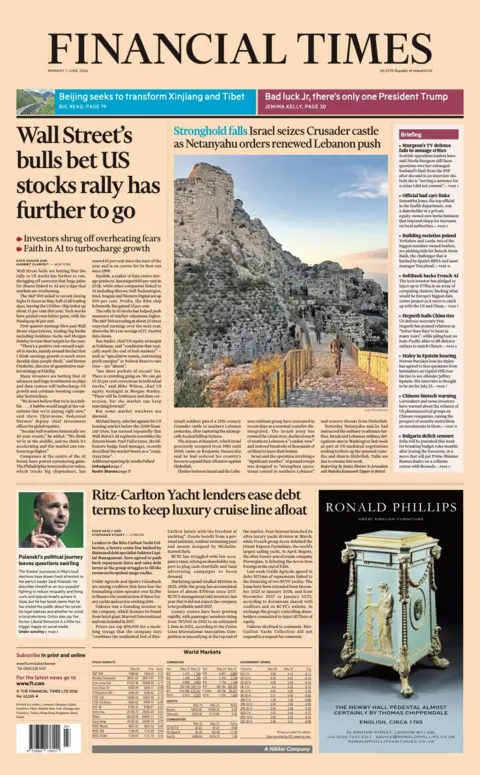
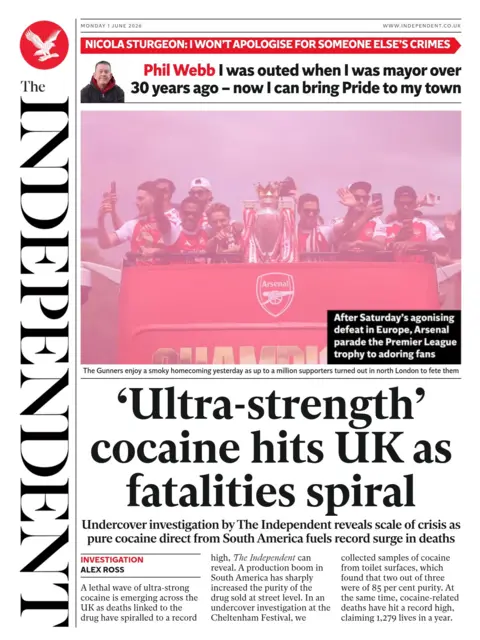

The Guardian leads on the release of government documents about Lord Mandelson - which it says contain no record of measures taken to mitigate security concerns about him becoming the ambassador to the US. It says the files lack detail on steps put in place to deal with concerns about his links to senior figures in foreign states. Lord Mandelson declined to comment.
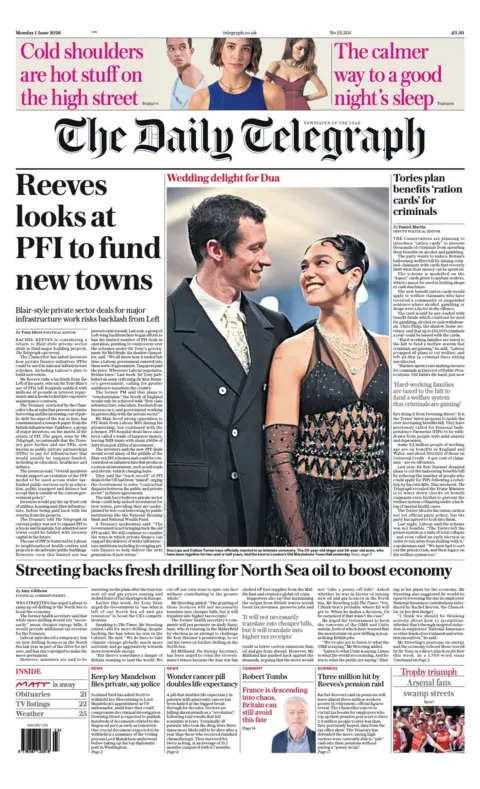
Chancellor Rachel Reeves is considering deals with the private sector to fund major building projects, according to the Daily Telegraph. The paper notes Reeves risks a backlash from the left of her party over what it calls the "Blair-style" initiative. The Treasury tells the paper it is not going back to the old model, but is considering ways private finance could support its infrastructure ambitions.
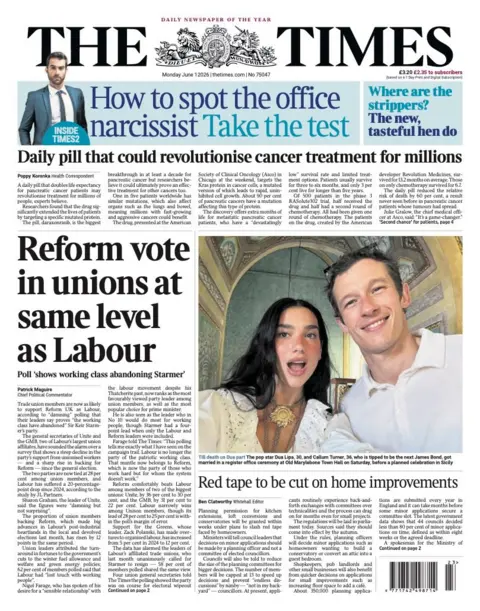
The Times says two of Labour's largest trade unions have warned that their members are now as likely to support Reform UK. Unite and the GMB say their poll shows "the working class have abandoned" Sir Keir Starmer's party. A Labour source is quoted as saying the party "is and always has been" for working people.
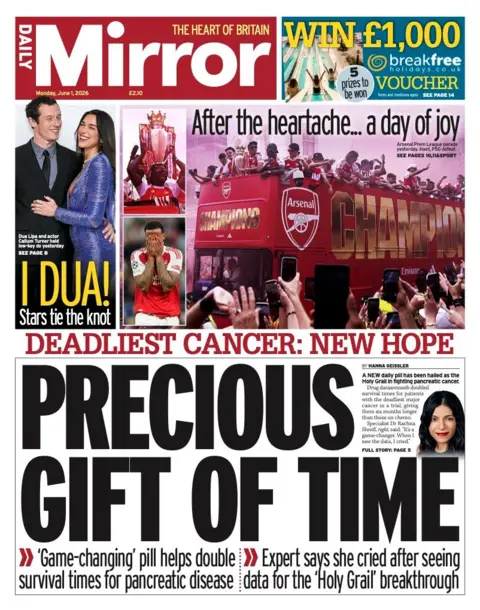
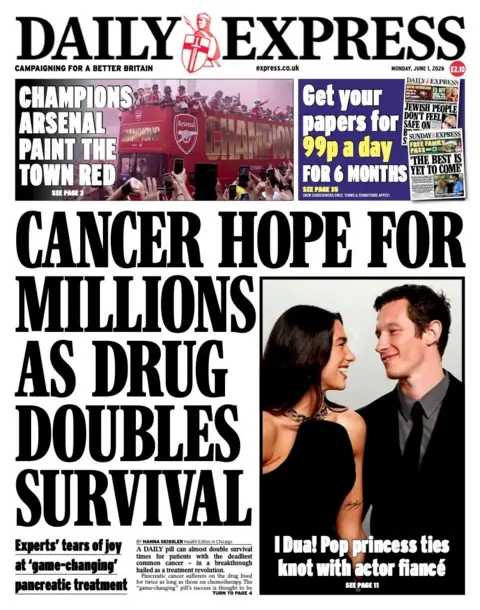
The Daily Express says the development of a pill that almost doubles survival times for pancreatic cancer patients brings "hope to millions". The paper calls the drug the biggest leap forward in the fight against the disease for decades. The Daily Mirror's headline reads "precious gift of time" and quotes a cancer expert who says she cried after seeing how effective the pill was.
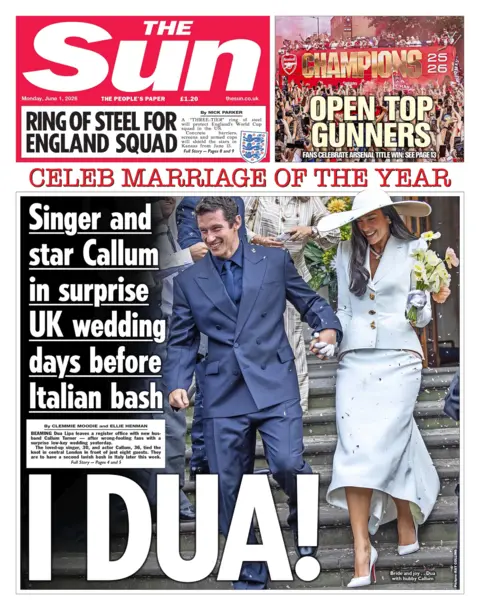
The Sun leads on the surprise wedding of the pop star, Dua Lipa, and the actor Callum Turner - in what it calls the "celeb marriage of the year". Its front page features a picture of the two walking down the steps of a register office in London, with the headline "I Dua!".
Rock markings in Mumbles in south Wales - the authenticity of which were dismissed in 1928 - have now been reclassified as the UK's oldest prehistoric cave paintings, according to the Guardian. It says scientists have used the latest methods to establish that the horizontal red bands were created more than 17,000 years ago.

Sign up for our morning newsletter and get BBC News in your inbox.

