South East Water customer survey a 'horror story'
 PA Media
Trust in South East Water (SEW) has been "materially weakened" after supply outages, research has concluded.
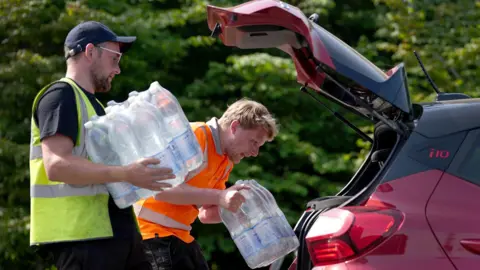
A report from the Consumer Council for Water (CCW) found more than half of the thousands of people it surveyed now stored bottled water at home in case of future incidents and almost a fifth of people only drank bottled water.
Dr Mike Keil, CCW chief executive, said "the story that is painted by this research is a shocker, it's a horror story" and showed the water company had "so much work to do to rebuild that trust".
SEW chief executive David Hinton said the company "welcomed" the CCW report.
 Getty Images
The survey looked into customers' experiences of the SEW supply incidents of November and December 2025, and at the start of 2026.
The pre-Christmas incident saw 24,000 properties lose their supply in the Tunbridge Wells area.
Customers were then advised to boil their water before consumption for a nine-day period after supply returned.
In January, after Storm Goretti, the taps ran dry for 30,000 businesses and households across the region.
More than 2,000 people took part in the online survey which was commissioned by the CCW and Ofwat.
The survey suggested that for some households, particularly families, older people and medically vulnerable customers, the consequences of the two outages "were especially severe".
 Getty Images
One parent told the survey team that during the January incident their 14-year-old daughter with Obsessive Compulsive Disorder would not go to school without a shower.
The parent said they were still struggling to get her back to school now.
"I can't blame that all on the water, but it really, really didn't help," they said.
Another who was affected by both outages said that because of their colitis they went to London to watch two films at a cinema because they wanted "to be near a toilet" and not having a working one at home "really affected" them.
Another SEW customer, who was recovering from a skin infection during the pre-Christmas supply incident, told the survey: "I was supposed to be following a decontamination protocol that was like wash five days with this incredibly intense body wash, which was basically impossible to do. It got infected."
'Less trust' in drinking water
Keil said the thing that "jumped out" to him from the research was "the legacy that was left with customers in terms of their behaviour change".
He said the fact so many people now stored bottled water at home in case of future incidents showed what "little faith" customers had in SEW's ability to deliver its core service.
A quarter of those affected by the December outage now feel less comfortable using tap water for washing and brushing their teeth, the survey suggested.
Also, 19% of those surveyed said they only drank bottled water since the Tunbridge Wells incident.
Keil called it a really "depressing picture", adding "we have world-class drinking water in England".
He said: "I would actually trust drinking water more than I trust bottled water. So it's really sad that because of these incidents it's really affected people's behaviour."
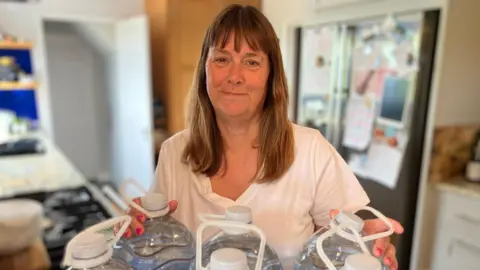
Marianne Amos, from Tunbridge Wells, told the BBC the outages had changed how she lived day to day.
"It's made us think every day, will we have water?" she said.
She said her household now stored bottled water throughout the home and had installed five water butts to use for flushing toilets.
"You just have to be prepared because if you leave it to the last minute and you think I've got no water [and] run down to the supermarket, there won't be any."
Amos described a constant sense of anxiety, adding: "I get angry, I also get upset that I just can't rely on a basic supply of water in 2026."
She said many neighbours were now doing the same, with some no longer drinking tap water at all, after a boil water notice was imposed following a winter outage.
"They're drinking bottled water because they don't trust what's coming out of the taps," she said, adding that she too felt uneasy about everyday use.
"You're having a shower and you get a bit in your mouth and you think, what's going to happen?"
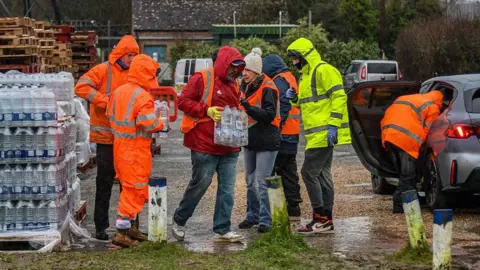
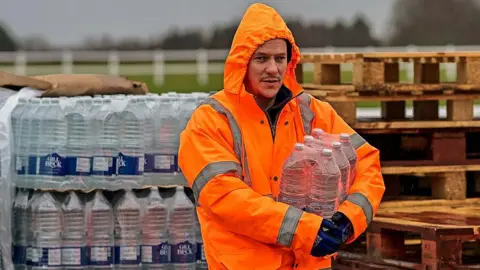
The survey also highlighted that during the two incidents accessing safe drinking water placed "a significant burden on customers", with residents reporting long queues at bottled water stations and "difficulties carrying water without access to a car".
The survey concluded that support for vulnerable customers on the Priority Service Register was "inconsistent" and in some cases deliveries of bottled water were left in "inaccessible places" leading to further problems for customers with mobility issues.
Across both incidents the survey suggested many people felt communications from SEW were not clear or detailed and were often seen as "too generic".
Keil said the report would be "one source of many" that would feed into the current investigation by Ofwat over whether SEW had breached its licence condition over providing high standards of customer service and support.
He said the company must "urgently address" the problems which had "plagued" it, adding that "restoring consumer trust will require meaningful change, a sharper focus on customers' needs and delivering on the commitments the company has made".
SEW CEO Hinton, who quit in May but remains in post over the summer to help with transition, said the company was "taking direct action" to change how supply interruptions were managed.
He said "We apologise unreservedly to all our customers for the unacceptable water outages experienced in December 2025, January, and most recently across wider areas of Kent.
"We recognise the serious impact this had on our customers and know that we fell short of what is expected of us."
He said this was through updating emergency procedures, making improvements to water treatment works, upgrading pipelines and increasing spare stock levels.
"We are also working hard to improve customer communication to ensure customers are provided with timely and accurate information about any interruptions across our supply area," Hinton added.
A spokesperson for Ofwat said it was "closely monitoring" the ongoing water supply disruptions in Kent.
They added: "We have already proposed a £22m fine following multiple supply interruptions in Kent and Sussex between 2020 and 2023.
"The company is also subject to an ongoing investigation into customer care during the supply outages in late 2025 and early 2026."
Follow BBC Kent on Facebook, on X, and on Instagram and listen to BBC Radio Kent on Sounds. Send your story ideas to southeasttoday@bbc.co.uk or WhatsApp us on 08081 002250.
