Prevent grass fires by clearing your garden - LFB

 PA Media
Londoners have been urged to remove dry vegetation from their gardens in an attempt to cut the risk of grass fires this summer.
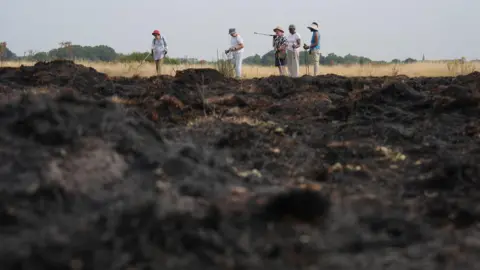
Last year, 122 wildfires were recorded by the end of August, the highest since the 2022 heatwaves and double the number seen in 2023.
The most at-risk areas are in outer London, especially where rural and urban environments meet.
London Fire Brigade (LFB) said taking action such as by creating fire breaks and clearing rubbish would be "critical in minimising risk as we head into summer".
LFB deputy commissioner Spencer Sutcliff said the brigade was looking at how the public can do their bit to mitigate the hazard.
One way to reduce the likelihood of a fire is by creating breaks - clear strips of land where long grass, dry leaves and other flammable plants have been removed. These gaps help slow or stop a fire from spreading by reducing how much it has to burn.
Sutcliff said: "This week, I wrote to the chief executives of every London local authority outlining key measures they can take, including creating fire breaks, clearing rubbish, and working closely with local landowners.
"We have strengthened how we plan, train, and respond to grass fires, but the steps we are asking councils and landowners to take now will be critical."
 LFB
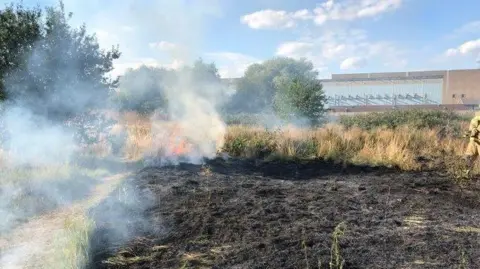
LFBBetween 2022 and 2025, outer London boroughs recorded over 6,000 grass fires, which is more than three times the number seen in inner London, where fewer than 1,800 were noted.
The highest totals were in Havering (536 grass fires), Bexley (494), Bromley (462), Hillingdon (419) and Enfield (404).
With forecasts this year indicating warmer than average temperatures, LFB said there was a clear need for early, preventative action to reduce risk to communities, infrastructure and the natural environment.
It called on people to dispose of their garden waste sensibly - by keeping it in secure piles and getting rid of it regularly and not leaving it to dry out near homes, fences and pathways.
Sutcliff said: "Spring cleaning offers a dual benefit: it keeps gardens and public spaces tidy and welcoming, while also helping to make communities safer.
"Grass fires can spread fast across parks and open spaces towards nearby homes. By creating fire breaks, removing dry debris, and storing waste safely, you can help protect your home, your neighbourhood, and local wildlife."
Listen to the best of BBC Radio London on Sounds and follow BBC London on Facebook, X and Instagram. Send your story ideas to hello.bbclondon@bbc.co.uk
