How a leaky Victorian school became a much-loved London music venue

 Getty Images
A builder daubs white lines across the new balcony floor of a Victorian church building in north London, while down below a fridge is about to be wheeled in.
"We only had that arrive on Friday," says Union Chapel's interim managing director Kathryn Dixon as she points at a low stage jutting out into the room.
Since the 1990s, Union Chapel in Islington has built a reputation as a famed music venue within a working church.
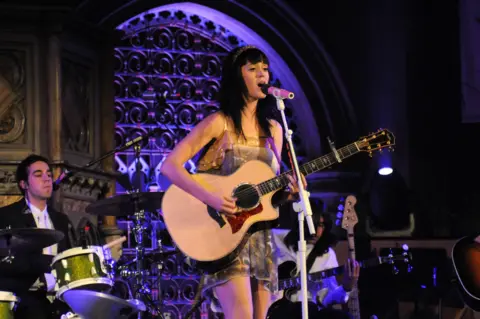
It's hosted everyone from Adele, Amy Winehouse and Ed Sheeran to Nick Cave, Mavis Staples and Noel Gallagher, and only last week was voted the city's top music spot by Time Out.
And now the chapel's Sunday School, which was only recently falling into disrepair, is set to begin hosting its own performers, with a new space for both emerging artists and those who the chapel has served for more than 200 years.
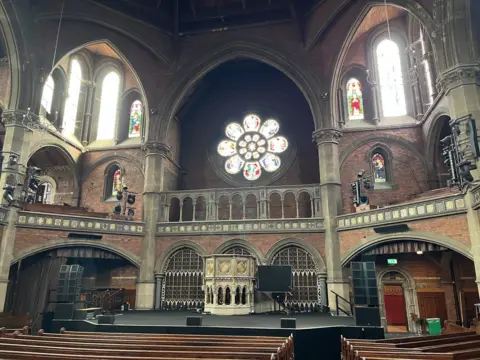
The original church began in a house in 1799 when local Anglican and nonconformist worshippers joined together, with the first Union Chapel being built after that.
Over the years it was enlarged and redeveloped until in 1877 a radical new octagonal church that could seat 1,500 people was opened, with a key theme at its core.
"They wanted to put music back at the centre of the congregation," says Barbara Basini, the chapel's head of conservation.
As such the church was designed to have amazing acoustics, while raked seating surrounded the raised pulpit so everyone had a great view no matter where they sat.
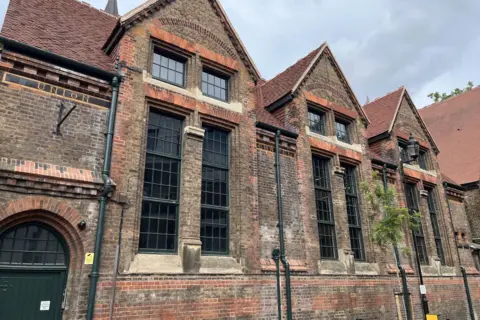
By the 1980s, the congregation had fallen to about 30 people and the entire church complex was falling apart.
An application was made to demolish the Grade I-listed building but with this withdrawn after an outcry, new attempts were made to finance repairs - this time by making the most of the advantages that Union Chapel was built with and hosting music events.
"They started really well so the charity was born out of them... with the main aim to preserve this building to the highest state for the community," says Basini.
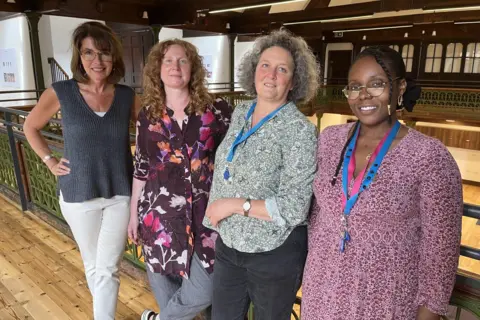
The same has applied to the Sunday School building, which took over from a previous teaching space hidden in some vaults.
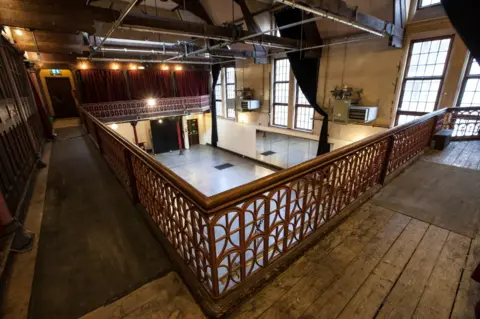
Also opened in 1877, it featured an unusual Akron design where classrooms separated by curtains were situated on a balcony above a larger space below.
Intended to support 1,000 children from the community, some 200 are thought to have attended each day and, while it was called a Sunday School, classes would take place throughout the week.
Basini explains that "one of the aims of a Nonconformist church was to provide free education and improve people's outcomes in life."
 Daniela Sbrisny
As with the chapel, the late 20th Century saw the school disintegrating along with the building that surrounded it and the space ended up on Historic England's at-risk register.
The room continued to be used primarily as private rehearsal space for actors and other artists (Elton John and Radiohead are among those to have practised there) but occasional patch repairs were failing to keep the elements at bay.
"The fixings had all gone and then in 2017 we had roof tiles which fell on the street and hit a car - and we had just finished the latest repair work," Basini says.
A project was therefore devised to return the Sunday School to public use and, nearly a decade on, and with £2.5m of funding from the likes of the National Lottery Heritage Fund and Historic England, a launch party on Wednesday will mark its new beginning.
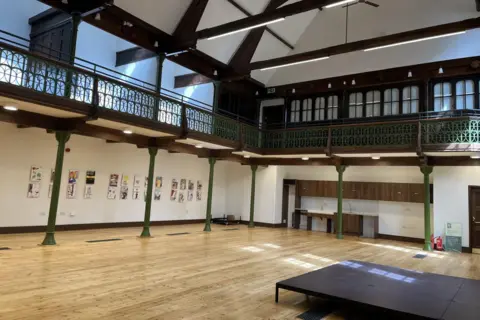
Along with the new space for performances, work has also gone into creating Union Chapel's first public archive inside the school, which covers more than two centuries of the church's history.
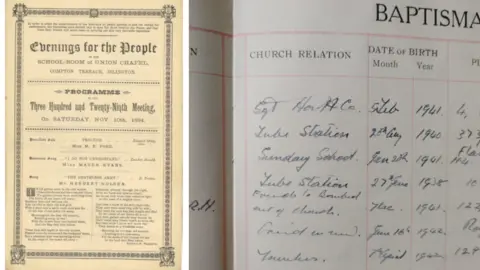
Much of this has been developed from material found in numerous boxes tucked away over the years in the school's rooftop classrooms, as well as documents discovered while work was taking place.
"We found lots of bits from under the floor when the builders were working," says the chapel's archivist, Chanel Nelson.
"So we've got various things, like letters - there's one letter in particular where it talks about teachers being too lenient for children, which is quite funny."
 Getty Images
The work has revealed much about new characters linked to the chapel, like Welsh Victorian singer Megan Watts Hughes who invented the eidophone, which allowed her to visualise her voice using sand. She taught at the school in the 1870s.
New information has also been unearthed about many of the chapel's ministers such as the Rev Ronald Taylor, who led the church during the Blitz.
"He baptised people in Highbury Tube station while the Tube was running, things like that," says Nelson.
 Union Chapel
The history found in this new archive has been used to devise a free festival called Your Story, which is taking place in the Sunday School across the summer.
"When Chanel identifies interesting characters then we curate the programme inspired by the new findings and I work with artists and creatives to put together the events," participation manager Cristina Carrasco explains.
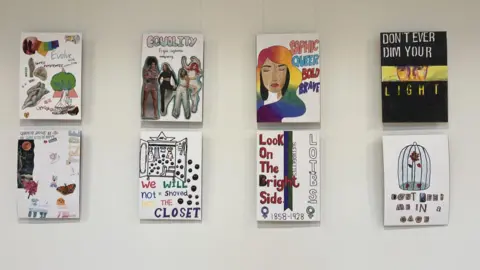
As a result this summer's events include everything from jazz collectives and gastronomy to a youth-led fashion show and an art exhibition for Pride month.
"The programme is free with the aim to engage new audiences and bring opportunities to people who wouldn't have the chance to engage with our heritage and history," adds Carrasco.
And it is this link to the local area which remains key to the work which will be going on in the future, says Dixon.
"This space is now and forever more about community and emerging artists and such uses.
"It's things that we haven't been able to do in the past so we will retain a great degree of this space for community use."
Listen to the best of BBC Radio London on Sounds and follow BBC London on Facebook, X and Instagram. Send your story ideas to hello.bbclondon@bbc.co.uk
