What you need to know as Barking and Dagenham heads into local elections
 Getty Images
What happened in Barking and Dagenham at the last council election in 2022?
The turnout was 24.5% - the lowest in London - and Labour won all of the seats on the council.
Labour - 51 seats.
Since the election, three councillors have defected from Labour to the Greens and one has defected from Labour to the Conservatives.
Election expert Tony Travers on what might happen in Barking and Dagenham in 2026
Professor Tony Travers, of the London School of Economics, said that Barking and Dagenham has always been held by Labour, but this time they're going to lose seats.
The question is how many, probably to Reform, possibly to the Greens, could the council move towards no overall control?
Why do the local elections in London matter?
At the moment, Labour are dominant in London - they have 21 of its 32 councils, a record-equalling high.
The Conservatives run just five - having lost their former "crown-jewel" councils of Wandsworth and Westminster to Labour at the last borough elections in 2022.
The Liberal Democrats run three councils in south-west London and will be looking to gain Merton from Labour.
The Aspire Party run Tower Hamlets and two boroughs are currently in no overall control.
Nick Bowes, insight director from the London Communications Agency, said: "These are likely to be the most consequential elections in London, certainly for the past 20 years - possibly since the first borough elections in 1964."
He added: "The ways things are fragmenting in the polls it's very difficult to predict exactly what's going to happen but it does look like being a very bad night for Labour and the Conservatives in London."
When are the 2026 local elections in Barking and Dagenham and who can vote?
More than six million Londoners can vote in the council elections on Thursday 7 May 2026.
All 32 London boroughs are up for election.
There are also elections for the mayor in five boroughs: Croydon, Hackney, Lewisham, Newham and Tower Hamlets.
All candidates in the Barking and Dagenham Council election will be listed on the borough's website.
Use our tool to see what elections are being held in your area.
Key dates in Barking and Dagenham Council local election
The deadline to register to vote is Monday 20 April 2026.
The deadline to apply for a postal vote is Tuesday 21 April 2026 at 17:00 BST - you must be registered to vote before you can receive a postal vote.
The deadline to change existing postal or proxy voting arrangements is also Tuesday 21 April 2026 at 17:00.
The deadline to apply for a proxy vote is Tuesday 28 April 2026 at 17:00.
Photographic voter ID is required to vote at a polling station - if you do not have valid Voter ID, the deadline to apply for photo ID to vote (called a Voter Authority Certificate) for this election is Tuesday 28 April 2026 at 17:00.
Election Day: Thursday 7 May 2026 from 07:00 to 22:00.
You can find more information about voting in Barking and Dagenham on the council's website.
 Getty Images
Where is Barking and Dagenham and who lives there?
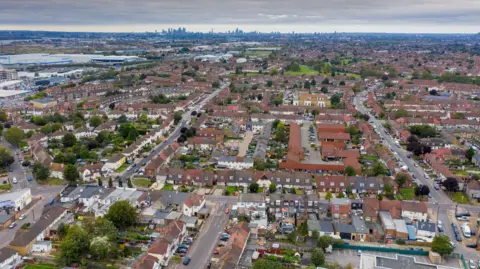
The London Borough of Barking and Dagenham is in east London. It is bordered by Havering, Redbridge, Newham and the River Thames.
What's it like? It is young, rapidly growing, and highly diverse - 25% of its population is under 16, the highest proportion in England and Wales. It is one of London's most affordable boroughs but also has high levels of deprivation.
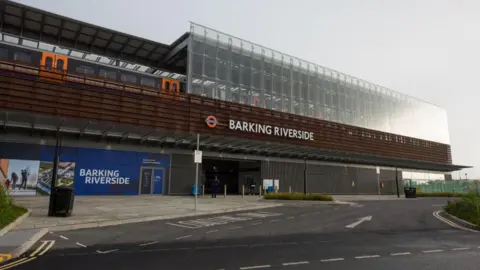
Neighbourhoods: Becontree, Barking Town Centre, Barking Riverside, Dagenham Dock, Dagenham East, Chadwell Heath, Parsloes Park, Beam Park, Mayesbrook Park, Rippleside, Central Park.
Places of interest: Eastbury Manor House, Valence House Museum, Eastbrookend Country Park, St Margaret of Antioch, Barking, The Broadway theatre, Barking Abbey ruins.
Pub quiz fact: The Becontree Estate, constructed between 1921 and 1935, is one of the largest council estates in Europe with around 27,000 homes.
Population: In 2024 the population was estimated to be 232,747.
Demographics: According to the 2021 census, 46% of people in the borough identify as white, 16% as black African and 17% as Bangladeshi or Pakistani.
At 17.7%, Barking and Dagenham's population increase was the second-highest in London.
Average property price: According to the Office for National Statistics (ONS), the provisional average house price in Barking and Dagenham in December 2025 was £354,000.
Average monthly rent: The ONS says the average monthly private rent in Barking and Dagenham was £1,681 in January 2026.
Council tax: Band D council tax in the borough for 2026/27 is £2,198.
Transport:TfL says there are five Tube stations, one Elizabeth line station, one London Overground station and around 385 bus stops in the borough. National Rail stations include Barking, Dagenham Dock and Barking Riverside.
More information about Barking and Dagenham can be found here.
 Getty Images
What is Barking and Dagenham's local history?
Barking Abbey, founded in the 7th Century, was one of the most important female establishments in the country, and its abbesses included saints and queens. The abbey was dissolved in 1539 by Henry VIII and the ruins remain a tourist attraction.
The parish of Dagenham also has ancient roots and once included a significant part of the now mostly lost Hainault Forest.
It is probably best-known as the site of what was Europe's largest car plant. Ford Dagenham opened in 1931 and the riverside site had its own blast furnaces and power station. Employment at the plant peaked at around 40,000 workers in 1953, while around 2,000 people work at the site today.
Barking and Dagenham was one of six London boroughs to host the 2012 Summer Olympics.
What is Barking and Dagenham's electoral history?
The borough was formed in 1965 from the merger of the boroughs of Barking and Dagenham, which were then transferred from Essex to Greater London.
Labour has controlled the borough since its creation and has been the only party with councillors since 2010. This has historically been seen as one of Labour's safest councils in London.
In 1968 the Conservatives won 13 councillors and in 2006 the British National Party won 12, but in both cases lost them all to Labour at the next election.
Listen to the best of BBC Radio London on Sounds and follow BBC London on Facebook, X and Instagram. Send your story ideas to hello.bbclondon@bbc.co.uk
