What you need to know as Haringey heads into local elections
 Getty Images
What happened in Haringey at the last council election in 2022?
The turnout was 34.4% and there was a swing of 1.1% from Labour to the Lib Dems.
Labour: 50 seats (+8)
Lib Dems: 7 seats (-8)
Since the election there have been a series of expulsions and defections in the Labour group - one joined the Greens, two are sitting as Independent Socialists and two as independents. The Greens also won a by-election in 2025.
Election expert Tony Travers on what might happen in Haringey
Professor Tony Travers of the London School of Economics said Haringey was strongly Labour held, "but it's a borough of two halves: on the west side there's a strong Liberal Democrat presence, they'll be hoping to push further east, Labour are certainly going to be in retreat.
"How well will the Greens do? Probably quite well, so Haringey looks as if it will go to a no overall control position. It is hard to judge which party will be biggest."
Why do the local elections in London matter?
At the moment, Labour are dominant in London - they have 21 of its 32 councils, a record-equalling high.
The Conservatives run just five - having lost their former "crown-jewel" councils of Wandsworth and Westminster to Labour at the last borough elections in 2022.
The Liberal Democrats run three councils in south-west London and will be looking to gain Merton from Labour.
The Aspire Party run Tower Hamlets and two boroughs are currently in no overall control.
Nick Bowes, insight director from the London Communications Agency, said: "These are likely to be the most consequential elections in London, certainly for the past 20 years - possibly since the first borough elections in 1964."
He added: "The ways things are fragmenting in the polls it's very difficult to predict exactly what's going to happen but it does look like being a very bad night for Labour and the Conservatives in London."
When are the 2026 local elections in Haringey and who can vote?
More than six million Londoners can vote in the council elections on Thursday 7 May 2026.
All 32 London boroughs are up for election.
There are also elections for the mayor in five boroughs: Croydon, Hackney, Lewisham, Newham and Tower Hamlets.
All candidates in the Haringey Council election are listed on the borough's website.
Use our tool to see what elections are being held in your area.
Key dates in Haringey Council local election
The deadline to register to vote is Monday 20 April 2026.
The deadline to apply for a postal vote is Tuesday 21 April 2026 at 17:00 BST - you must be registered to vote before you can receive a postal vote.
The deadline to change existing postal or proxy voting arrangements is also Tuesday 21 April 2026 at 17:00.
The deadline to apply for a proxy vote is Tuesday 28 April 2026 at 17:00.
Photographic voter ID is required to vote at a polling station - if you do not have valid Voter ID, the deadline to apply for photo ID to vote (called a Voter Authority Certificate) for this election is Tuesday 28 April 2026 at 17:00.
Election Day: Thursday 7 May 2026 from 07:00 to 22:00.
You can find more information about voting in Haringey on the borough's website.
 Getty Images
Where is Haringey and who lives there?
The London Borough of Haringey is in north London. It is bordered by six other boroughs: Enfield, Waltham Forest, Hackney, Islington, Camden and Barnet.
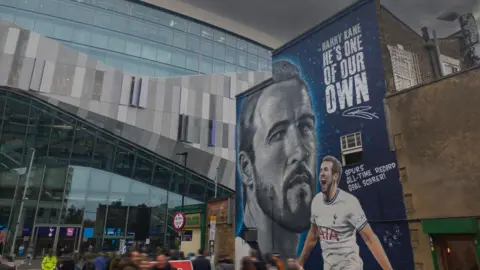
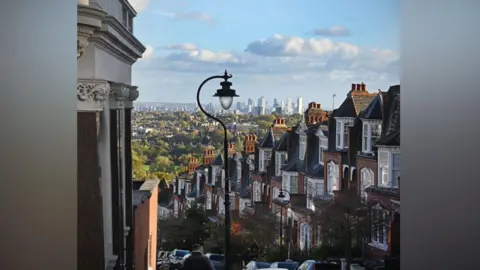
What's it like? Haringey is at the heart of north London: it has leafy, affluent areas beside busy urban neighbourhoods; hundreds of restaurants serving cuisine from all over the world; and great parks and open spaces. And it's home to a Premier League football club.
Neighbourhoods: Tottenham, Wood Green, Crouch End, Muswell Hill, Green Lanes, Stroud Green, Fortis Green, Seven Sisters, St Ann's, Noel Park, Hornsey.
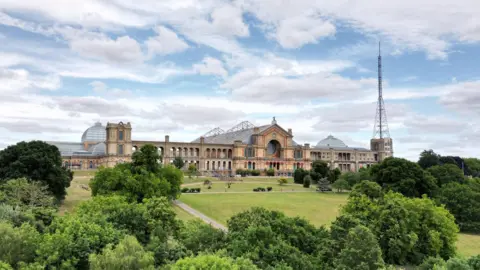
Places of interest: Tottenham Hotspur Stadium, Alexandra Palace, Tottenham Marshes, Markfield Beam Engine and Museum, Bernie Grant Arts Centre, Finsbury Park.
Pub quiz fact: The world's first regular public TV service began on 2 November 1936, broadcast from Alexandra Palace. The first day's programming lasted for one hour.
Population (2024 estimate): 263,850.
Demographics: According to the 2021 census, 57% identify as white, 17.6% as black, 8.7% as Asian, 7% as mixed race and 7% as another ethnic group.
Average property price: According to the Office for National Statistics (ONS) the average house price in Haringey in December 2025 was£625,046.
Average monthly rent: The ONS reported that the average monthly rent in February 2026 in Haringey was £2,197.
Transport:According to TfL there are seven Tube stations, five London Overground stations and around 425 bus stops in Haringey.
There are also a number of suburban rail stations and major interchanges at Tottenham Hale, Seven Sisters and Finsbury Park train stations.
 Getty Images
What is Haringey's local history?
The area was likely settled by the Saxons and was part of the Middlesex Forest.
The current High Road was part of a Roman road built to connect Londonium - Roman London - to settlements in the north.
Like many of the villages around London, the arrival of the railway in the 19th Century brought industry and housing to what were becoming suburbs.
Rapid development around areas like Wood Green and Bowes Farm saw agricultural land become streets of middle class housing.
In the 20th Century the area was bombed in the Blitz during World War Two, and in the post-war period it was popular with immigrants from the Caribbean and Ireland.
The borough name is Haringey - it was created in 1965 with a merger of the boroughs of Wood Green, Hornsey and Tottenham.
There is a district within the borough called Harringay: along with Hornsey, the names are all thought to derive from the name of a Saxon chieftain called Haering.
What is Haringey's electoral history?
Haringey has been run by the Labour Party since 1971, after a three-year period with the Conservatives in charge.
The decline of the Tory vote – they haven't had a councillor on Haringey Council since 2002 – was mirrored by the rise of the Lib Dems.
Their highest number of seats was 27 in 2006 when Labour won 30, and throughout the past 20 years Labour has maintained a majority at each election.
Correction 13 April: An earlier version of this article stated that "...Labour has increased its number of seats at each election." This was incorrect and has been amended to say that Labour has maintained a majority at each election.
Listen to the best of BBC Radio London on Sounds and follow BBC London on Facebook, X and Instagram. Send your story ideas to hello.bbclondon@bbc.co.uk
