Di rare case wia woman carry belle for two men at once
Wia dis foto come from, David Zorrakino/Europa Press via Getty Images
- Author, Santiago Vanegas
- Role, BBC Mundo
- Read am in 5 mins
For 2018, one woman bin go to di Laboratory of Population Genetics and Identification for di National University of Colombia to do paternity test for her two-year-old twin boys.
Di lab run am and den dem repeat am. Di result shock dem sotey dem do am again to make sure. Di twins get di same mama, but na two men born dem.
Dis na rare case wey dem dey call heteropaternal superfecundation. Na only like 20 cases don dey reported worldwide for scientific text.
But sabi pipo for di university tok say dem bin know say somtin like dis dey possible in theory but dem neva see am for real life bifor. So e immediately ginger dia scientific interest.
Wia dis foto come from, Drs Producoes via Getty Images
How dem find out
To test for paternity, scientists for di Institute of Genetics for di National University of Colombia use technology wey dem dey call microsatellite markers.
Dis involve looking inside tiny fragments of DNA from di pikin, di mama and di alleged papa and dem go kon compare am.
Professor William Usaquén wey be di director for di laboratory tell BBC Mundo say "we take DNA from each pesin, examine between 15 and 22 points, called microsatellites and compare dem one by one".
But di process dey more complex dan just to put di DNA under powerful microscope.
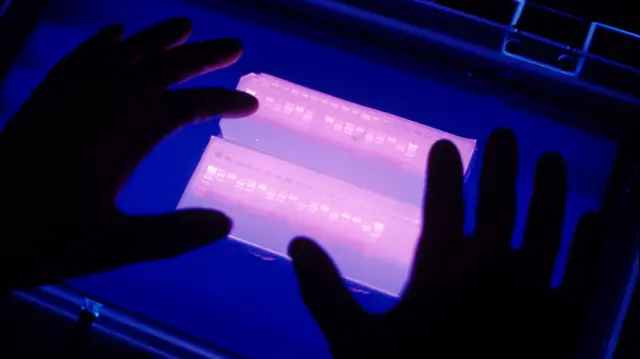
Afta dem collect blood samples wit finger prick, scientists carry out chemical procedure to separate di tiny amount of DNA from di components.
Wia dis foto come from, Getty Images
Dem kon place di DNA into specialised equipment to boost am.
Di liquid wey comot go den dey mixed wit fluorescent dyes wey go mark di 15 to 22 microsatellite points wey dem go analyse.
Dem go come carry am go anoda machine wey go kon read di microsatellites wey dey each sample and dem turn am to numerical sequence for wetin dem dey call electrophoresis.
Lastly, researchers go kon use dis numerical sequences to take determine how likely e be say di man wey dem test na di pikin papa.
Wen half di pikin genetic profile match di mama and di oda half match di papa, na so dem dey take confam paternity.
Ogbonge result
For di case of dis twins for Colombia, di scientists bin analyse 17 microsatellites for di DNA of di mama, di two pikin and di alleged papa wey bin come for testing.
Usaquén tok say "I don be director of di lab for 26 years and dis na di first case we don eva see and so far, na di only one".
One genetics sabi pesin and researcher for di Institute of Genetics for di National University of Colombia , Andrea Casas tok say, "we don hear from oda reports say dis cases dey happun but na veri low frequency worldwide".
To go wit protocol, di team kon repeat di test from scratch to rule out possibility of error or sample mix-ups. Di results bin come out di same.
Wia dis foto come from, andipantz via Getty Images
Why e dey so rare
One 2014 tori wey scientists for one lab for Baltimore, US, bin publish, show say out of one database for di 39,000 paternity tests, only three cases of heteropaternal superfecundation bin comot from am.
Usaquén explain why dis kain tin fit happun.
E tok say, "fist, di woman gatz get two sexual partners. Second, she gatz don sleep wit di two men between veri short period of time. To add to all dat, dem gatz be polyovulation".
Polyovulation na di release of two or more eggs for one menstrual cycle.
Usaquén tok say, "last-last, both of di eggs need to dey fertilised".
E kon joke say, "Na from rare event to anoda rare event, plus anoda rare event wit yet anoda rare event. Unfortunately, we no dey play di lottery".
E also dey important to know say twins from different papa no go fit eva dey identical sake of say identical twins dey comot from one egg and sperm.

Wia dis foto come from, Getty Images
Private lives
For most cases wia woman release pass one egg, and one dey fertilised, di oda or odas go kon old and die sharparly.
Dis na anoda reason wey make superfecundation dey so rare, di second fertilisation gatz happun bifor di oda egg die.
Di US National Library of Medicine tok say egg dey live for less dan 24 hours afta dem release am.
However, Andrea Casas explain say di eggs fit no dey released at di same time.
She tok say, "sometimes one ovary go release egg, den two or three days later release anoda one".
She add say e dey increase di chance say di two eggs go fertilise for different times.
Anoda reasom why di amount of cases no plenti like dat be say plenti pipo no dey too do paternity test but researchers for di Institute tok say wit di way wey more pipo dey run paternity test, dis kain tin fit dey less unusual,
While scientists for like know wetin cause dis kain conception tori, research ethics no go gree dem to ask about di private life of di pipo wey dey run dis tests.
"Paternity tests dey always dey carried out wit di utmost respect for di integrity and privacy of dose wey dey involved," Usaquén explain.