


Standing army
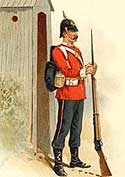
There have been great fluctuations in size, as it has expanded to meet the demands of war and contracted in peacetime. There have been a series of reforms, sometimes provoked by setbacks in the field and sometimes by political reappraisal of its form and function.
And there is a contrast between continuity (today’s rank structure and regimental system would not confuse the Duke of Marlborough, victor of Blenheim in 1704) and discontinuity (the impact of technology has produced radical change, for instance between 1916 and 1918).
'In the Middle Ages, feudal magnates had retainers who served them in return for land grants ...'
Of course, there were British soldiers before 1661. In the Middle Ages, feudal magnates had retainers who served them in return for land grants, but during the Hundred Years War against France, professional soldiers, serving by contract, largely replaced men who followed their lord simply because of a feudal obligation. Yet there was no permanently constituted army which existed in peace as well as in war.
The Restoration of Charles II saw the birth of a standing army that belonged to the king. Parliament soon asserted control, but it took years for the army’s central administration to evolve.
It was not until the mid-19th century that it went from hotchpotch arrangements with infantry and cavalry under the Commander-in-Chief at Horse Guards in Whitehall, artillery and engineers under the Master-General of the Ordnance, and supply and transport in the hands of a civilian commissariat, to a single Secretary of State for War, a unified chain of command and militarised logistic and medical services.
Published: 2005-02-28

