The live page has now ended - thank you for joining uspublished at 13:29 BST
Thank you for tuning in! The live page has now ended but there is a story on our indexes recapping the talking points from the meeting.
This live coverage has closed - but you can read more about this story in our full piece
Repeated water supply issues have caused "lasting damage" to trust in Kent and Sussex, regulators have told MPs - after senior leadership from South East Water (SEW) were questioned over a spate of outages
Earlier, the chair of the water company told the Environment, Food and Rural Affairs Committee (Efra) that it had "failed our customers" after the disruptions
At least 24,000 customers reported problems in November and December - weeks later, as many as 30,000 households were hit with more issues, which one resident likened to "Armageddon"
Regulator Ofwat has also proposed fining the water firm £22m over issues affecting 286,000 people in Kent and Sussex between 2020 and 2023 - the second-largest fine ever proposed
The acknowledgement from the South East Water boss that the company could have done more is a significant change from his previous evidence, says our environment correspondent
Senior figures at Ofwat, the Drinking Water Inspectorate, and the Consumer Council for Water have been speaking to Efra - who's asking the questions?
Thank you for tuning in! The live page has now ended but there is a story on our indexes recapping the talking points from the meeting.
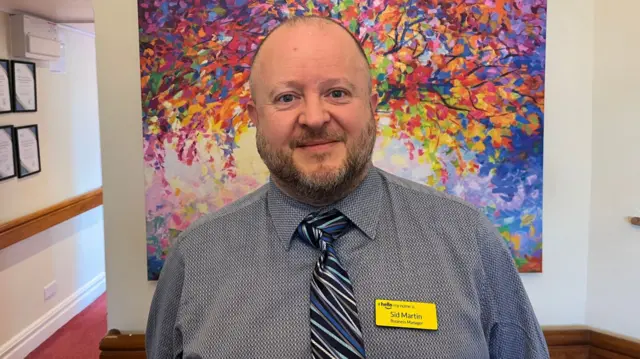
Milward House care home in Tunbridge Wells was without water for six days during the outage in December.
Business manager Sid Martin says the home, which had 22 residents and 11 others in independent living flats, remains out of pocket despite receiving compensation.
“As we are considered to be one billing address, we only received the standard £690 compensation from South East Water,” Martin says.
“We spent nearly the same amount on having our extra recycling taken away from all the drinking water bottles, plus the same again for plumber call-outs to get rid of airlocks in the system.”
Joshua Askew
Journalist, South East
Water bills have risen for South East Water (SEW) customers - as they have done for customers of other water companies across the country.
The water company was set to raise prices by an average of 7% from April, bringing the average bill to £324 for 2026/27 - up from £303 for the year before.
SEW customers previously expressed their anger at the increase, with one woman from Kent telling the BBC she felt like she was being "robbed".
The industry trade body Water UK said bill increases were needed to fund vital upgrades to the system.
SEW has said it will invest £2.1bn over the next five years to improve customer service, reduce supply interruptions and strengthen its resilience.
The select committee has now finished its questioning of water regulators, with chair Alistair Carmichael thanking them for their time.
The three regulators - Chris Walters, the Ofwat CEO; Dr Mike Keil, CEO at the Consumer Council for Water; and Dr Marcus Rink, chief inspector at the Drinking Water Inspectorate - speak of their hope that South East Water's performance will improve.
Wrapping up, Carmichael says that he doubts this hearing will be the end of Parliament's interest in the ongoing saga.
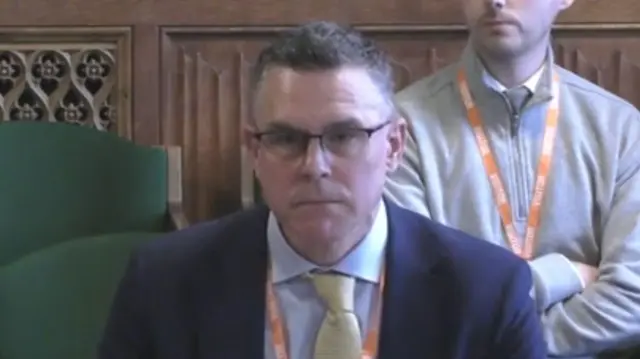 Image source, PARLIAMENT TV
Dr Mike Keil, CEO at the Consumer Council for Water, says a survey of South East Water customers in the area shows 54% now store bottled water in case there is another outage, and 19% now only drink bottled water.
On top of this, 25% feel less comfortable using tap water to wash and brush their teeth, Keil says.
He adds: “This type of interruption, of this duration, has lasting damage and lasting consequences.“
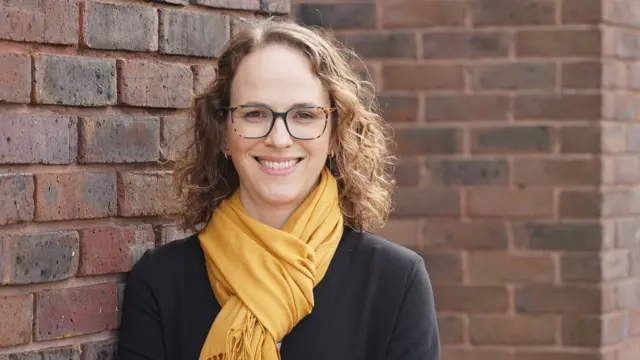 Image source, Liberal Democrats
Mid Sussex MP Alison Bennett says the South East Water board has “inexplicably” backed chief executive David Hinton despite “significant operational failings”.
“It is clear that South East Water failed at the absolute basics – missing regulatory checks and ignoring years of recommendations, not keeping an eye on the risks and being slow to react when problems started, and a chaotic emergency response,” she tells the BBC.
Bennett does not sit on the Efra select committee, but is following closely as the local MP for an affected area.
She adds: “I did not see anything today that gives me confidence that my constituents' water supply is secure and that the company will be able to better manage an outage in future.”
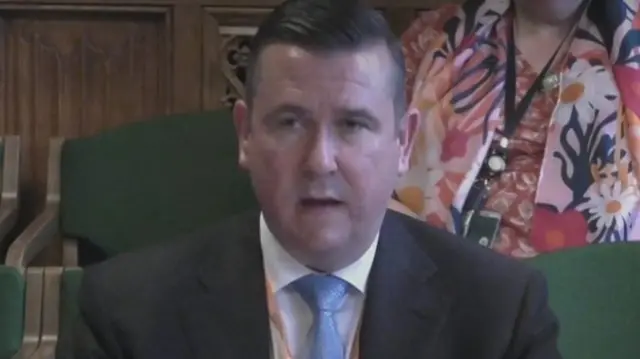 Image source, PARLIAMENT TV
Speaking to the committee, Chris Walters, chief executive at regulator Ofwat, is questioned over whether South East Water (SEW) is a company willing to learn from its mistakes.
“On the basis of what I’ve heard today and interactions with the company since [the outages], we are seeing steps forward being made,” Walters says.
“Only time will tell if those are sufficient – which is part of the reason why I welcome SEW’s commitment to work constructively with us.”
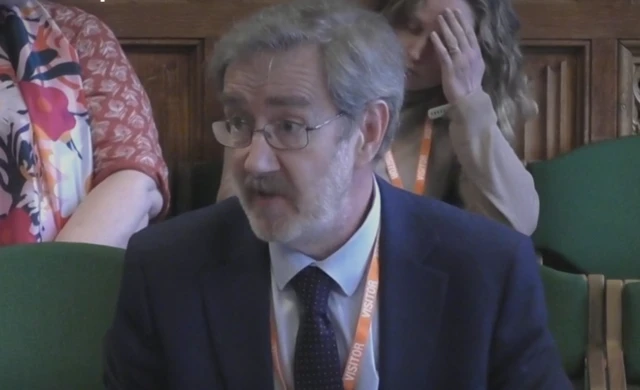 Image source, PARLIAMENT TV
As water regulators begin to give evidence, the chief inspector of the Drinking Water Inspectorate (DWI) tells the committee that it was not notified of the outages by South East Water.
“The reason we responded to the event was because we weren’t notified by the company,” Dr Marcus Rink says.
“I was notified by my staff that there was a developing event, and we deployed to the site.”
MPs have taken a short recess, and are now hearing from water regulators who will share their insights on South East Water.
Those set to speak are Chris Walters, the Ofwat CEO; Dr Mike Keil, CEO at the Consumer Council for Water; and Dr Marcus Rink, chief inspector at the Drinking Water Inspectorate.
You can watch them speak live above.
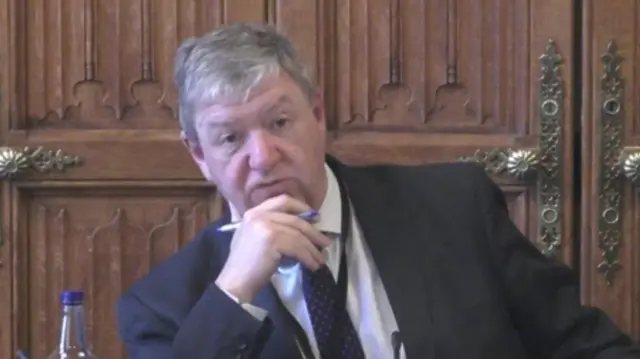 Image source, Parliament TV
South East Water boss David Hinton says someone once described the company to him as "a really good company with an interruptions problem".
Committee chair Alistair Carmichael quips in response that "the operation was a success but the patient died".
Hinton explains that the company's water quality and linkage performances were good despite its supply issues.
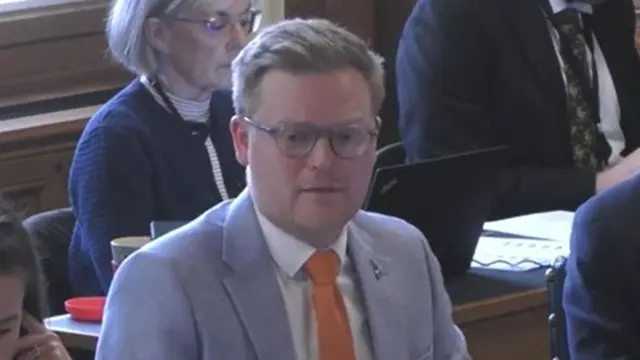 Image source, Parliament TV
MP Josh Newbury, who previously worked in communications in the NHS, questions South East Water (SEW) on how it “failed so comprehensively” to communicate during the outages.
He also says the company's communications during those times were “haphazard and inconsistent” and the issues they faced were "about as abject as failure can get in our world".
SEW chief executive David Hinton acknowledges: “Communications needs to be better, absolutely.”
He says trying to predict when water supplies would return “was a trap we fell into”.
“This is one of those ones where we really need to learn the lessons," he adds.
South East Water sought an injunction in March to prevent the release of Ofwat’s investigation and report into the firm’s failings between 2020 and 2023.
Chief executive David Hinton tells the committee that it was not sought to stop the investigation, but to delay it.
“We felt there was more dialogue to be had with Ofwat,” he says. “We made it [the injunction application] in good faith.”
Jenny Riddell-Carpenter, one of the select committee's MPs, responds: “It does nothing to build trust with your customers. It does the complete opposite.”
Chief executive David Hinton says South East Water made nearly 35,000 bottled water deliveries to vulnerable customers during the outage – but missed 70.
“We know how important what we do is for society and communities. It’s absolutely fundamental,” he tells the committee.
“It absolutely breaks all our hearts when we can’t do that properly. And particularly when vulnerable customers are at the heart of what we’re trying to do and trying to achieve.”
However, Josh Newbury, one of the select committee's MPs, points to a “lack of early action” and that a vulnerable customer team was not set up until days after the incident began.
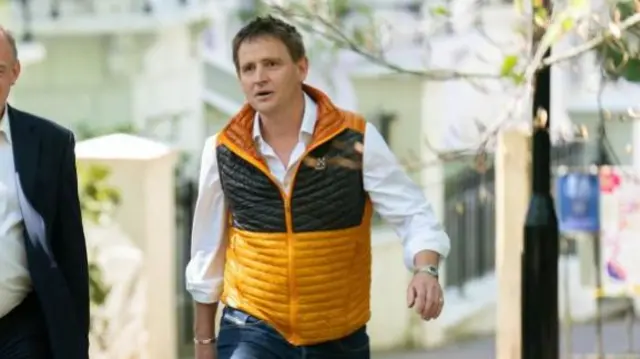 Image source, PA Media
Tunbridge Wells MP Mike Martin says the Efra select committee is witnessing a “pathetic performance” by South East Water executives.
“If the board think that Dave Hinton is the best person for the job, then they too are failing in their job,” Martin tells the BBC.
Martin does not sit on the Efra select committee, but is following closely as the local MP for an affected area.
Chief executive Hinton has previously faced several calls to resign from MPs in the South East, and the leader of Kent County Council.
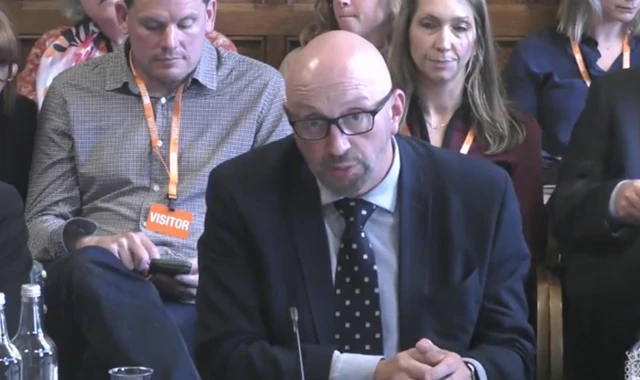 Image source, Parliament TV
Chief executive David Hinton says South East Water "didn't spot it early enough" when issues began in November.
"If we had spotted it earlier we would have resolved it," he adds.
"We could have made it less likely to happen as well with some impacts on site, but for me we could have worked our way through that issue and solved it if we had spotted it earlier and responded to it earlier.”
South East Water chief executive David Hinton concedes that he “got it wrong” over how quickly he communicated with the public after the recent outages.
“That is very much a lesson that we have learnt for the playbook of how we handle future events,” he says.
Asked by Sarah Dyke, one of the select committee's MPs, what would change, Hinton adds: “We went through the pain of getting it wrong. And part of the transformation process is to learn from that, and that is well embedded already into the organisation.”
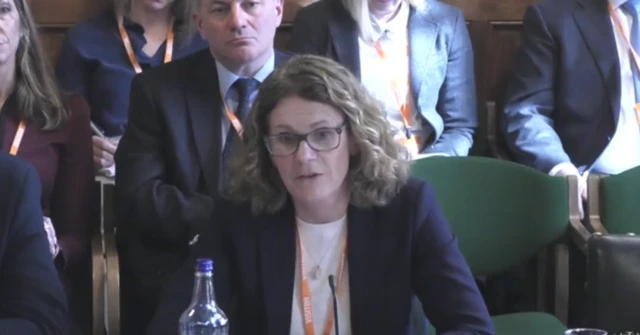 Image source, Parliament TV
Caroline Sheridan, the company's non-executive director, acknowledges "there is a risk with the culture of South East Water".
Her remarks come as committee chair Alistair Carmichael questions the company's culture of "groupthink" - when a group of people reach a consensus without thinking critically about alternatives.
Sheridan says although the company's culture has its benefits, it also has “red flags”.
“Changing culture will not happen immediately, but we need to take the steps," she adds.
 Fiona Irving
Environment correspondent, South East
After an investigation into South East Water that lasted nearly two and a half years, last month Ofwat - the water services regulation authority - proposed a £22m fine for the water company.
It’s the second-biggest fine the regulator has ever proposed.
The investigation looked into six supply outages between 2020 and 2023 which affected more than 286,000 people, but it didn’t include the interruptions between last November and January.
Ofwat is currently carrying out another investigation which it launched in January after the recent supply problems.
This one is looking into how South East Water supported its customers during those outages.
It’s the first investigation the regulator has launched which looks at whether a water company is complying with its licence.
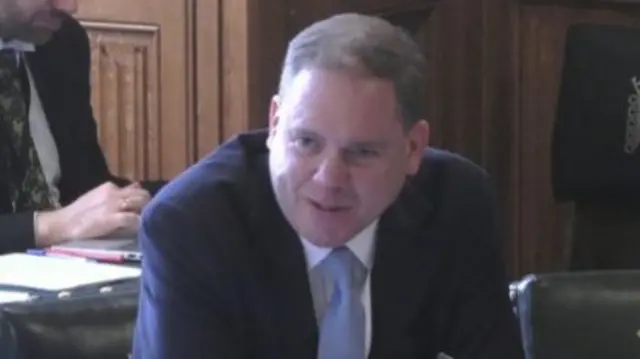 Image source, PARLIAMENT TV
At the hearing, Charlie Dewhirst MP warns the South East Water executives that the company risks a “Groundhog Day” situation, highlighting major water outages in 2018, 2022 and 2025.
Chief executive David Hinton says there has been “a list of learnings” from each outage.
“We’ve moved on an enormous amount, but we are not there yet,” he adds.
Dewhirst ends by calling some of the sites chosen to distribute water during the most recent outages as “pretty farcical” due to their accessibility.
 Helen Catt
Political editor, South East
The committee doesn't have any powers over companies so it can't fine South East Water, force it to sack its chief executive or make it take any specific action.
As a formal part of the parliamentary system, though, the committee's words carry weight.
Criticism in its reports, or by public statements from its chair, can put pressure on a company or the government.
It’s also the convention that a witness tells the truth to Parliament, so that means MPs can try to get answers that might not otherwise be publicly available.
It’s worth remembering that this wider inquiry is into the water industry as a whole, and the committee has spoken to several other companies as part of it, although South East Water is likely to be singled out for attention because of the problems it’s had.
