How can changing your food shop help biodiversity?
The same foods are repeatedly blamed for a decline in biodiversity, but should you remove them from your shopping basket altogether? And if so, is that really enough to solve the problem?
You’ve no doubt heard about how cattle farming and palm oil production have led to deforestation, resulting in damage to biodiversity. But if you want your food shop to have the least possible impact on species diversity, what should you do? Is it best to simply drop a handful of products from your shopping basket – and if so, which ones? Would eating a more varied diet help? Or, for those who can afford it, would only buying foods farmed in a particular way be most effective? We spoke to experts to find out…
Why worry about biodiversity?
“When a species goes extinct, it’s gone forever. Losing species isn’t just deeply sad, it’s also dangerous. It’s like throwing bits of an aeroplane out the window mid-flight – we don’t know what species are crucial parts of a functioning ecosystem. And when ecosystems start unravelling, we all suffer. We rely on nature for literally everything that matters: food, air, water. Our health depends on the planet’s health”, explains Dr Laura Kehoe, a post-doctoral research fellow in ecology at the University of Oxford.
How does food damage biodiversity?
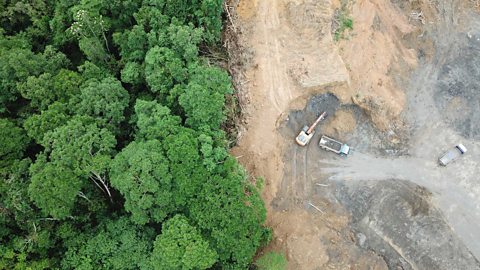
Deforestation is a big part of the problem. “In only 13 years we’ve lost the equivalent of the size of Mexico in wilderness regions. A leading cause of this destruction is the expansion of farms”, says Kehoe.
But there are other factors to consider. “We’re monocropping [growing a single crop year after year on the same land], we’re covering up major centres of biodiversity… we’re altering the climate, we’re changing everything that enables biodiversity to thrive and making it more fragile”, says Tim Lang, Professor of Food Policy at City University of London.
How we produce our food is critical, including our farming practices, the sprays we use and how we manage waste. “A field isn’t just a field, a crop isn’t just to crop, it depends how we grow it, how much [we grow], and whether we’re using it in a wasteful way or in a way that is actually feeding us”, continues Professor Lang.
The reduction of variety in foods we eat is an important factor. “We now mainly grow just a handful of crops from a possibility of hundreds”, says Dr Helen Harwatt, a food and climate policy fellow at Harvard University. But she also highlights the dominance of farmed animals: “If we add up the weight of all land mammals, including humans and wild animals, on the planet, farmed cows and pigs alone account for 51 percent). Of all birds, farmed chickens account for 57 percent. We’re essentially pushing out wild animals and native ecosystems, and replacing them with farmed animals and cropland.”
What can we do?
There is no simple solution. “Rich people have lots of choice, poor people have much less, it’s harder for people on low incomes… so the messages have to be different according to people’s circumstances”, says Professor Lang. What does he recommend? “Eat less, eat diverse, buy organic and sustainably produced food wherever possible, and eat a variety of plants.”
Should we give up any foods? “Every food I can think of could be beneficial to biodiversity if it was grown in a way, and eaten in an amount, that’s in balance with nature. This would mean eating a lot less meat and eating foods grown using regenerative farming techniques [techniques that seek to rehabilitate the ecosystem]”, says Dr Kehoe.
But she acknowledges it isn’t all down to the consumer: “Within the food industry I would like to see a very radical transformation. The food processing industry has got to support organic and biodiverse cropping systems. They must simply produce less. And they must phase down and alter animal production.”
Many foods are in the firing line, but here are some of those often associated with impacting biodiversity.
Soya
Soya is associated with deforestation, but does that mean we have to cut it out completely? “Soya is a very remarkable crop, and very nutritious”, says Professor Lang.
So what’s the problem? It “is being farmed in a vast monoculture, with sprays, pesticides and insecticides, and also with fertilisers”, says Lang. “One variety, one crop, nothing else allowed to grow there. And then the land on which it’s grown is cleared from what was biodiverse. So, it’s a double whammy.”
Soya is “a leading driver of deforestation in Latin America”, explains Dr Kehoe. There is particular controversy over soya being used for animal feed, and there is some disagreement over the proportion of soya imported to the UK that is used in this way. According to The Sustainable Food Trust it's just 35 percent, but Walter Fraanje from the Food Climate Research Network at the University of Oxford says about 90 percent of the UK’s soya supply is used for feed. The argument is that soya could provide more nutrition gram for gram if eaten than if recycled through an animal. “All factory farmed meat is inherently resource-inefficient. It’s also difficult to trace the impacts. For example, if you buy chicken in the UK you have no way of knowing if it was fed Brazilian soya that’s driving the Amazon rainforest to an irreversible tipping point”, she says.
But not all livestock you buy is raised on soya. “65 percent of British farmland is only suitable for grassland, and the most efficient way to turn this inedible grass into high-quality, nutritious protein is to graze livestock – arguably providing the most climate-friendly way of feeding our growing population. Our extensive grasslands also act as a vital store of carbon and provide a habitat for floral diversity, which is dependent on grazed land to thrive”, explains Stuart Roberts, Vice President of the National Farmers’ Union.
Beef, pork and chicken
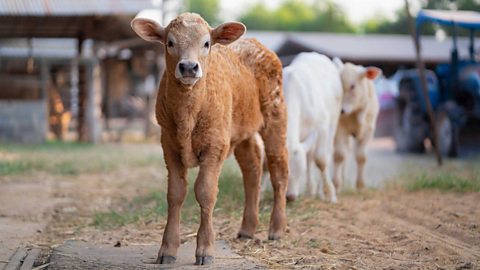
Soya feed is used for intensively farmed cows, pigs and chickens. But there’s another problem with much beef. It “is the number one driver of deforestation in Latin America”, says Dr Kehoe. However, it is important to note that the UK currently imports just 35 percent of the beef and veal it consumes, according to The British Meat Processors Association.
The by-products of intensive farming are blamed for damaging the surrounding environment. Waste is fed into manure lagoons, which “leach into ecosystems”, says Dr Harwatt. This can potentially pollute rivers, lakes and groundwater.
Does this mean eating meat inevitably damages biodiversity? “There are responsible ways of eating meat. You can begin with knowing the farm your animal came from and what kind of life the animal had. There are examples of well-managed, pasture-raised meat”, says Shefali Sharma, director at the Institute for Agriculture and Trade Policy’s European Office.
Wild and farmed fish
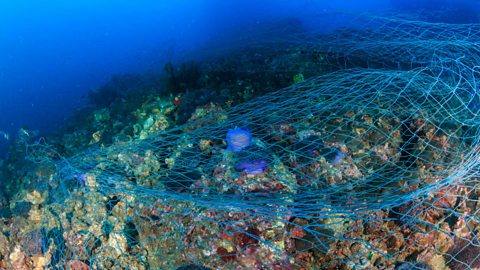
“In the last 50 years, fishing has been the leading cause of loss of marine biodiversity, and scientists are concerned about the collective threats facing our seas”, writes the Marine Conservation Society. You can find out which fish it identifies as the most sustainable here.
Fish are sometimes caught up in trawlers as ‘by-catch’ (fish caught by mistake and thrown back into the sea). Around 10 million tonnes of by-catch is caught per year and thrown back into the sea, often dead, according to Mike Berners-Lee in his book There is No Planet B.
Farmed fish also have a “major biodiversity impact”, says Dr Harwatt. “In some cases, wild fish are caught and fed to farmed fish, further increasing the impact”. She also warns that “shrimp farming is a driver of mangrove forest clearing”. Mangrove forests are associated with protecting coastlines, sustaining sealife and slowing climate change.
“Fish are also used in farmed animal feed. So it is quite a long, complicated chain, with many adverse impacts on biodiversity along the way”, adds Dr Harwatt.
Rice, wheat and maize
These three grains take up “40 percent of global cropland”, according to a 2016 Science for Environment Policy document by the European Commission. The same report reveals they contribute “a matching 40 percent to global biodiversity impacts”. They may not be as impactful gram for gram as some other crops, but monocropping and pesticide and herbicide use are important issues.
A number of farmers, including some in the UK, are using technology to enable them to use less or no pesticide and herbicide, and rotating crops throughout seasons to re-introduce biodiversity to fields and improve the soil.
As for consumers, why not try varying the grain you eat? From buckwheat to millet, there are plenty of options, and the more diverse our plate the more demand there will be for a diverse range of crops to be grown.
Palm oil
“Palm oil is causing a lot of deforestation, especially in Indonesia”, says Dr Kehoe. Borneo has lost almost 40 percent of its forests to palm oil in the last 10 years, resulting in a widely reported devastating loss of habitat to the orangutan. “Britain’s contribution is that its companies are helping shape that”, says Professor Lang. Palm oil is in a wide range of products, from shampoo to biscuits.
So should you stop consuming palm oil? It “is incredibly efficient… There are other vegetable oils but they grow less efficiently. If we switch to different oil it might take up more land than palm oil”, according to Emma Napper, Producer on the BBC's Seven Worlds, One Planet. Some palm oil is grown on existing plantations rather than requiring cutting down more rainforest. Companies can sign up to the Roundtable on Sustainable Palm Oil and pledge to trace where the palm oil comes from, stop cutting down forest to produce palm oil and use oil that is at least partially sustainable.
Dairy
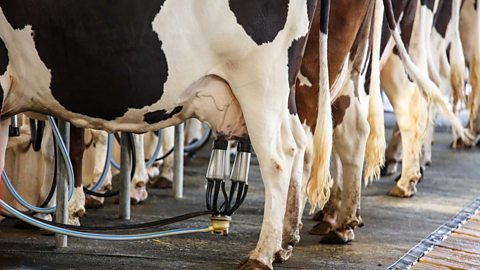
“Dairy milk and cheese have large impacts because of the land use, manure, chemicals and water use – and because of the quantities they’re consumed in… Cheese is a problem because it’s basically a very condensed version of milk, requiring multiple litres of milk to produce 1kg of cheese”, explains Dr Harwatt.
However, again many of these issues are overcome if the animals are fed on pasture. “Ruminants [cows and sheep] in particular are very positive because they convert plant-based material that’s not edible for humans, such as grass, into high-value, high-nutritient protein… they’re effectively bio-converters”, says Professor Nigel Scollan, Director of Institute for Global Food Security, Queen’s University Belfast.
Coffee and cocoa
While coffee and chocolate are grown on a smaller scale than some of the most impactful foods, they are also linked to deforestation. “Cocoa can be grown in vast great monocropping. It can also be grown in a biodiverse way. It depends how you do it”, says Professor Lang.
“Deforestation, biodiversity loss, land degradation and the loss of ecosystem services provided by forests are emerging as potentially negative consequences of cocoa production”, according to a report from The Institute for Sustainable Development and International Relations.
Shade-grown coffee and cocoa, which is grown under trees, is considered to promote species diversity of migratory birds and native flora and fauna, potentially reducing the need for pest control.
Do all countries face the same issues?
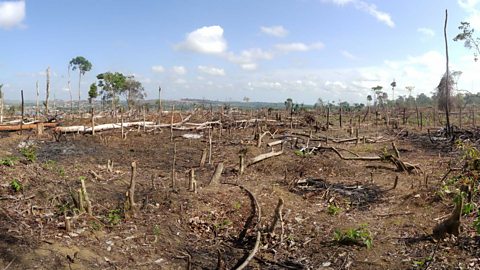
“Land clearing is more specific to certain countries”, says Dr Harwatt, “mainly those in the middle- and low-income categories, as high-income countries have largely converted their native ecosystems already and/or rely on other countries to produce some of their food. For example, the UK, which is in the temperate forest zone, has only 13 percent of forest cover remaining and imports around half of the food it consumes. Some European countries have a much higher forest coverage… There are also biodiversity ‘hotspots’, so it could be interpreted that the removal of native ecosystems is more of a problem in the countries where those hotspots are located, such as Brazil.”
What about Britain? “The destruction of biodiversity in Britain is absolutely shocking”, says Professor Lang. “It’s not forest – we got rid of our forests mostly in the 16th, 17th and 18th centuries – but we’ve sprayed, we’ve done all the same things that are happening elsewhere in the world”.