Joining plastics
Permanent fixings
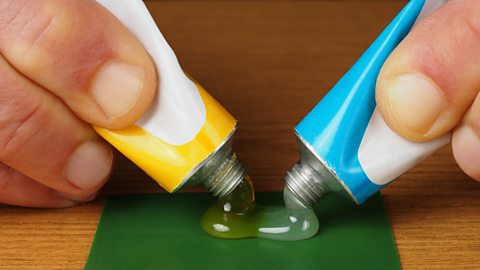
Materials are joined permanently by using A substance which bonds the surfaces of materials together., a substance that bonds surfaces together. Adhesives can range in bonding strength and types depending on the materials that need joining. Examples include:
- Solvent cement - Designed specifically for gluing acrylic to acrylic. It is applied to one surface using a brush or syringe and the other piece is held in place while it sets to leave an invisible join.
- Epoxy resin (ER) - Used to join dissimilar materials, it is a two-part adhesive supplied as resin and hardener. Both are mixed in equal quantities before being applied to the surfaces that need joining but it takes a while to set so the parts will need clamping.
- Contact adhesive - Used to join dissimilar materials and gets its name from sticking two surfaces together on contact. The adhesive is applied to both surfaces and air dried for ten minutes before the two surfaces are aligned and stuck together.
Plastic welding
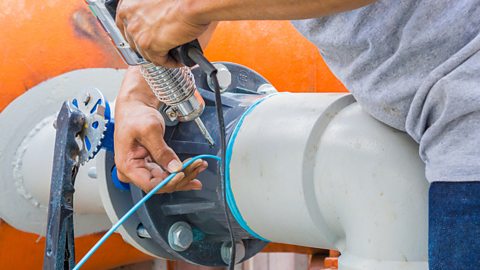
Polymers can also be A method of joining metal by the addition of molten material. together, melting the edges of the join so they connect together. Also called ‘thermoplastic’. Can be reformed when heated, and therefore can often be recycled. welding rods can be used to melt additional plastic into the join to secure the fixture.
Temporary fixings
Temporary fixings will often be achieved using fastening components, which can be easily put together, or removed if needed, using basic tools such as a screwdriver or a spanner. The most used fixings are:
- rivets
- nuts and bolts
- screws
- washers
- catches
- hinges
