All about Mexico
Famous for its rich cuisine, historic sites and vibrant cultural traditions, Mexico is the world's largest Spanish-speaking country, with a population of around 129 million.
You might have heard of celebrations like the Dia de los Muertos (Day of the Dead) and Cinco de Mayo. But how well do you know Mexico? BBC Bitesize has collated ten fascinating facts about the country you may not know…
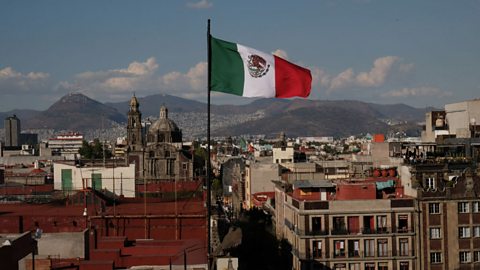
1. The meteor that killed the dinosaurs landed in Mexico
When a huge, six-mile-wide asteroid hit Earth 66 million years ago, so much dust and debris was released into the atmosphere that the sun was blocked out.
Scientists believe the darkness and freezing temperatures caused mass extinction because of disruption to the food chain. Without sunlight, photosynthesis stopped, so plants died and herbivores starved. Apex predators were then without food. It’s believed almost 75% of Earth’s species died out during this time – not just the dinosaurs.
But did you know the asteroid landed in what is now Mexico’s Yucatan Peninsula? It created a 110-mile-wide crater known as the Chicxulub Crater, which is now buried under a layer of rock.
2. Mexico is one of the most biodiverse countries in the world
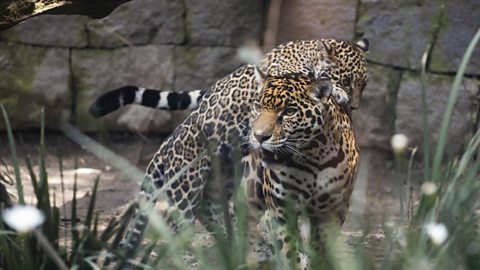
Mexico is considered 'megadiverse' - meaning it is home to a large proportion of Earth's species, plus some unique ones. It has a huge variety of different living organisms, with between 10,000 and 12,000 different animal species alone.
However, at least 146 mammal species and 145 bird species are considered threatened. That means they are likely to become extinct if nothing is done to prevent it.
There are threats from deforestation, agricultural expansion and the illegal wildlife trade. The axolotl and yellow-headed Amazon parrot are both Mexican species that are endangered – meaning there’s a high risk they will become extinct in the near future.
3. The world's largest pyramid is in Mexico
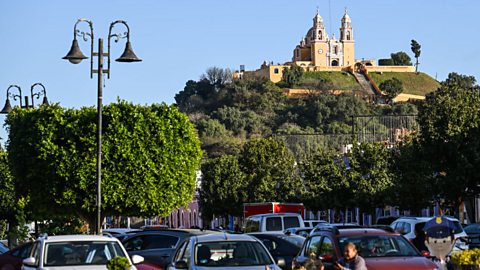
When you think of pyramids, Mexico probably isn’t the country that comes to mind. Egypt’s ancient Pyramids of Giza are the oldest in the world, dating back 4,500 years.
But they’re not the biggest. That title belongs to Mexico’s Great Pyramid of Cholula. It is 216 feet tall, with a base measuring more than 1,300 feet across – covering almost 45 acres.
The pyramid was constructed over a period of about 1,000 years, starting in the third century BC. It was a major religious temple dedicated to Quetzalcoatl, the Aztec god of wind, knowledge, arts and wisdom.
The first major excavation of the site took place in 1931, but much of it is still unexcavated because a Catholic church built at its summit by Spanish settlers in the 16th century is a protected site.
4. It has one of the world's oldest universities
Mexico is home to 35 UNESCO World Heritage sites – areas legally protected by the United Nations because they are considered treasures belonging to the whole world.
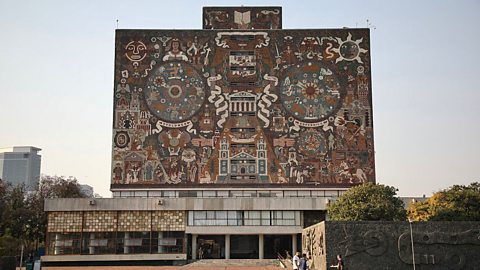
While the Cholula pyramid isn’t one of them, the oldest university in North America is. The Royal and Pontifical University of Mexico, now known as the National Autonomous University of Mexico, is the oldest continually operating university on the continent.
It was founded in 1551, which means it is older than the oldest university in the US – Harvard University – by more than 80 years. Its main campus in Mexico City features murals by famous artist Diego Rivera, and its alumni include multiple Nobel Prize winners and Mexican presidents.
5. The shortest ever presidency was in Mexico
The country’s 38th president, Pedro Lascurain, ruled for just one hour on 19 February 1913.
His resignation was planned from the beginning as part of a military coup. General Victoriano Huerta wanted to overthrow the sitting president, who was forced to resign when Huerta had him arrested.
The Mexican Constitution set out a line of succession for presidents. When Huerta also forced the vice president and attorney general to resign, Lascurain was next in line.
His only act as president was to make Huerta the interior minister – meaning he was next in line – before quitting.
6. Chocolate was discovered in Mexico
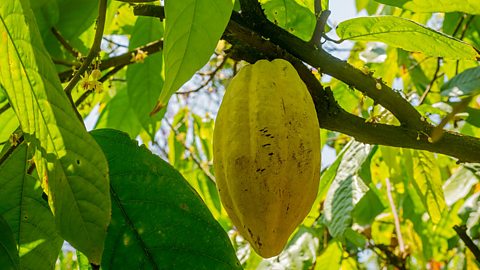
It’s believed the average Brit consumes between 8.1 and 11 kilograms of chocolate each year. But did you know chocolate was first discovered in Mexico?
The Olmecs, an early civilisation living in what is now southern Mexico, were the first to cultivate cacao beans. The Maya, who lived from 250-900 AD, turned the beans into a frothy drink often called ‘xocolatl’ by mixing them with water, chillies and vanilla.
By the time Spanish colonialists arrived in Mexico in the 16th century, the Aztecs revered chocolate as a gift from the god Quetzalcoatl, reserving it for priests, warriors and the rich. When it was brought back to Europe, milk, sugar and cinnamon were added to make it sweet rather than bitter.
Mexico is still a major exporter of chocolate today, primarily to the US. Globally, as much as 12 billion kilograms of chocolate confectionery is consumed each year.
7. It can be Christmas every day in Mexico
A lot of the UK’s chocolate consumption happens at Christmas – and if you’re a fan of the festive season, you might want to consider a trip to Mexico.
The country is home to Tlalpujahua, a mountain town in the state of Michoacán. Its residents are responsible for handcrafting more than 70% of Mexico’s glass Christmas ornaments, millions of which are exported worldwide every year.
Up to half of the town’s shops are dedicated to Christmas, and from October to December it hosts a festival called Feria de la Esfera – the Christmas Sphere Festival – with light shows and markets.
And it’s not the only town like it in Mexico. Chignahuapan in Puebla is also famous for its blown-glass ornaments and year-round Christmas boutiques.
8. A Mexican played a key role in colour television

We take it for granted now, but colour television was once just an idea – and a Mexican engineer was a pioneer in making it a reality.
Guillermo González Camarena was experimenting with mechanical televisions from the 1930s, and in 1940 he patented his ‘trichromatic sequential field system’. It used a spinning disc with red, green and blue filters to capture and broadcast images which the human eye blended into a full-colour picture.
Camarena declined offers from American investors and universities because he wanted Mexico to be the country with the first colour television. However, he was beaten by John Logie Baird, a Scottish inventor who demonstrated an early fully integrated colour television using his own system in 1944.
On 21 January 1963, Mexico’s Channel 5 broadcast the first colour picture in the country’s history using Camarena’s system. Because it only required an adapter rather than a whole new television, it was affordable for general audiences. Before he died in 1965, Camarena was given Mexico’s highest civilian honour, the Order of the Aztec Eagle.
9. Is this the smallest volcano in the world?
There are 30 Holocene volcanoes in Mexico – meaning volcanoes that have erupted at some point in the last 11,700 years. That makes it the 11th most volcanic country in the world. The first is the US, with 165 Holocene volcanoes.
The Cuexcomate volcano is 43 feet tall and has a diameter of 75 feet, meaning it is widely considered the world’s smallest volcano. It was created during the eruption of a different volcano in 1064.
However, Cuexcomate is actually an extinct geyser – a rare type of hot spring that sometimes erupts boiling water and steam – rather than a true volcano, a vent in the Earth’s crust that erupts molten rock.
For the world’s smallest active volcano, you’d need to travel to the Philippines, where Mount Taal stands at just over 1,000 feet tall.
10. Forget the Blue Lagoon - these ones are pink
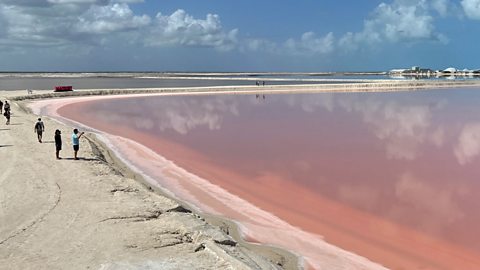
You might have seen the bright pink waters of Las Coloradas on social media, as they’ve become a favourite of tourists and influencers from around the world.
Before its fame, Los Coloradas was a small fishing village that has produced salt since the Mayan period, when it was used to preserve food and as a trade item.
The unusual, vibrant colour comes from the algae, plankton and brine shrimp that live in the water. They thrive in salty conditions and produce a natural red and orange pigment – the same one that makes carrots orange.
This pigment becomes visible as the water evaporates in the sun. Flamingos are actually pink because their diet is rich in these same creatures.
