All about passwords
Used for generations, passwords have long been part of everyday life. Without them, it would be extremely difficult to safely access a lot of information that we need.
But what are passwords? And who invented them?
Here, BBC Bitesize takes a closer look at the history of passwords, what makes a strong password and why they are so important. You can also try our brainteaser below!
What is a password?
A password is a secret word of string of characters, such as letters, numbers and symbols with the purpose to identify a person or user’s identity. Acting as a security barrier, it proves who you are to a computer system, device or online account.
This prevents unauthorised people or users from gaining access to private information or physical items. Today, passwords are primarily used to log into emails, websites, apps or to gain physical access to something.
Who invented computer passwords?
Passwords aren’t a new phenomenon; they've been used for centuries in more traditional forms. Historically, generations have used everything from codes to passphrases to gain access to a physical object, information or to enter a certain place.
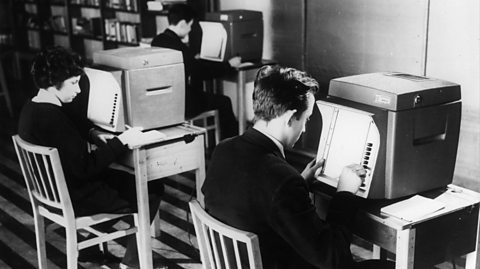
The digital password in its early form was introduced in the 1960s. by computer pioneer Fernando Corbató, who died in July 2019 and is widely credited with first using passwords to protect user accounts.
While working at the Massachusetts Institute of Technology (MIT), Dr Corbató developed a technique called time-sharing, which enabled multiple people to use a computer computer at the same time. The operating system for computers was called the Compatible Time-Sharing System (CTSS).
How do I make a strong password?
In this digital age, a password is usually required to access files or information. It can be tempting to use a basic password that is easy to remember, or the same one for every account, but you should always choose a password that is difficult for someone else to guess.
If all your passwords are the same, it will be easy for a hacker to gain access to all your accounts if they find the password for one. Passwords can also expire, so it’s important to continue to use a new, strong password.
BBC Bitesize’s ICT guide to user accounts and passwords suggests the following when choosing a password:
A strong password is:
- At least eight characters long
- A mixture of numbers, uppercase and lowercase letters, and other symbols, eg !@#£$
- Not a real word
- Impossible to guess
A weak password might be:
- The word ‘password’
- Your favourite colour/favourite football team/pet’s name
- A single letter
Why are passwords important?
No matter what you’re accessing, passwords remain very important. They’re the primary defence against unauthorised access to any of your information.
This includes anything from personal information to financial data. Passwords act as a digital gate for online security but can also prevent impersonation online.
Brainteaser: Which is the right password?
Can you work out which passwords fit the requirements?
In this brainteaser, you'll be given a list of possible passwords and it's up to you to follow the instructions and figure out which ones are suitable. Good luck!
If you need some extra help, just click Show more to reveal a hint.
This article was written in May 2026
