'Hell itself is made fouler by the presence of John'
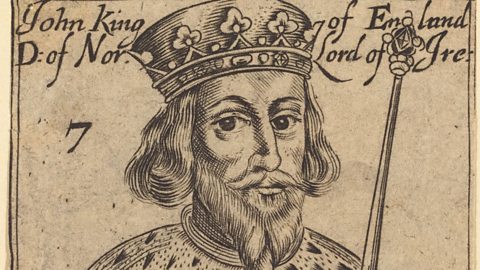
When you think of King John, you might picture the villain in Robin Hood – the tyrannical prince who usurps his brother’s throne while he’s away and makes everyone miserable with high taxes. The chronicler who wrote the above quote certainly had a similar opinion.
He ruled England from 1199-1216 and scholars have debated his legacy ever since. Was he a good king or a bad king? Did he make bad decisions, or did he do what he could in difficult circumstances?
One thing we know for certain is that John’s reign saw the creation of one of the most significant documents in history – the Magna Carta, sealed by John on 15 June 1215. Here, BBC Bitesize explains the charter’s history, what it says and why it’s still so important today.
What was England like during King John's reign?
When Richard I died in 1199 without any legitimate heirs – meaning he had no children within marriage – his younger brother John inherited the throne.
John was never expected to be king. He was even nicknamed ‘John Lackland’ because, as the youngest of Henry II’s four sons, he wasn’t given any significant titles or estates.
But it wasn’t all plain sailing, especially when it came to finances. England was in a lot of debt. Richard had waged wars against France and fought in the Crusades, which were both very expensive.
He was even captured and held for ransom by the Holy Roman Emperor in what is now modern-day Germany in 1193. The huge sum of 150,000 marks – over 25,000 kilograms of silver or about £2 billion in today’s money – was three times the Crown’s annual income at the time. It remains the most expensive ransom of a person in history and was paid in 1194.
John didn’t just inherit England. He was king of the ‘Angevin Empire’, which stretched from the border with Scotland to the Pyrenees in what is now southern France. He had control of Wales, parts of Ireland, the crucial power base of Normandy and other French lands.
Rather than one unified kingdom, this was a collection of different regions held together through allegiance to the King of England.
Why was the Magna Carta created?
Money was vital for keeping control of such a vast area of land, but finances weren’t John’s only problem. There were several others that caused barons – members of the nobility who held land directly from the king – to oppose him.
The Pope, the head of the Catholic Church, imposed an ‘Interdict’ on England in 1208. This meant priests and bishops no longer had the right to perform church services – a huge problem in a deeply religious country. It was lifted in 1214.
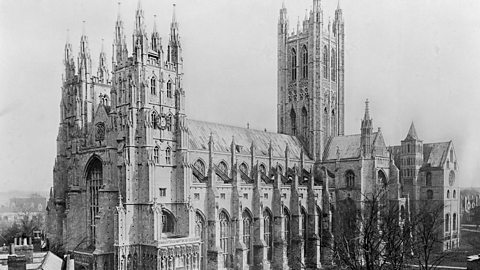
It all stemmed from a dispute over who should be the new Archbishop of Canterbury. The Pope had refused John’s preferred candidate, so John refused to allow the Pope’s choice to enter England.
John also gradually lost his lands in France, including Normandy in 1204, which led to another nickname. This time it was ‘softsword’, because his military leadership was seen as weak.
Winning land back required money, so John increased taxes on the nobles. His final failed attempt to reclaim Normandy came in July 1214 when he lost the Battle of Bouvines. It had cost the barons a fortune in taxes – and John imprisoned those who refused to pay them.
This sparked a full-scale rebellion against the king, which was supported by the Pope. In May 1215, a group of barons marched an army from the north and captured London. To avoid civil war, John met the rebels at Runnymede just outside the capital to discuss changes to the way England was ruled. These talks culminated in Magna Carta.
What is the Magna Carta?
The Magna Carta – Latin for ‘Great Charter’ – is the name of the document that set out what John and the barons agreed. There were 63 different clauses containing rules on land ownership, taxation and people’s legal rights.
The initial document was drafted by Stephen Langton – the cardinal that John had blocked from entering England – who acted as a mediator between the king and the barons.
Overall, the Magna Carta took some power away from the king and meant he’d need to work more closely with the barons. It stipulated that the monarch was not above the law, and that everyone had the right to a fair trial before being imprisoned or punished for a crime.
The charter also said that the king couldn’t raise new taxes unless the barons agreed, and set up a council of 25 barons to make sure John followed these rules.
The Magna Carta wasn’t signed in the way we’d expect today. Instead, on 15 June 1215, King John agreed to its terms by stamping his wax seal at the bottom – the medieval equivalent of a written signature.
Where is the Magna Carta now?
The charter was copied and sent to various locations around the country to make sure the terms were carried out. At least 13 copies were made by July 1215, though historians don’t know the exact number.
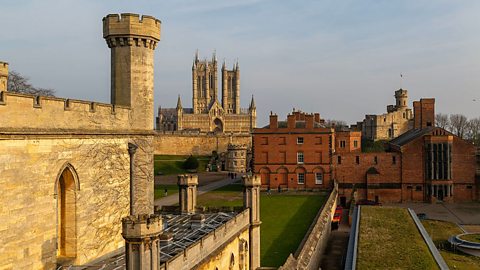
There are four surviving original copies of the Magna Carta from 1215. Two of them are held in London at the British Library. The best-preserved copy is kept at Salisbury Cathedral, and the fourth is on display at Lincoln Castle.
There are also later editions of the Magna Carta. It was reconfirmed by later monarchs six times during conflicts with barons. For example, Durham Cathedral holds three copies from 1216, 1225 and 1300.
In 1297, Edward I confirmed Magna Carta in Parliament, meaning it officially became law. This meant any future changes to the document would need Parliament’s consent. Three copies of this version still survive.
Why is the Magna Carta so important?
The Magna Carta is widely considered one of the most important documents in history, and the foundation for modern democracy and human rights.
Just three of its 63 clauses are still valid today – the freedom of the English church, the right to a fair trial and a clause confirming the privileges of the City of London. Its rules about fishing methods and how monks should dress may not be relevant now, but it formed the basis for many laws later on and influenced the US Constitution – which was written more than 500 years later.
In the short term, the Magna Carta actually failed as a peace treaty. John and the barons were at war again within three months. In fact, some historians believe neither side ever intended to stick to the agreement.
However, the charter has played a key role at several points in history. It was the first document to ever put into writing the idea that the king was subject to the law. The idea that someone could only be imprisoned or exiled if they were judged by their peers and the law of the land is the foundation of modern due process.
It was also quoted in the run-up to the English Civil Wars. The Parliamentarians, who opposed King Charles I, used it to dispute the idea of the divine right of kings and taxation without Parliament’s consent.
Key principles of the Magna Carta are also echoed in the 1945 Universal Declaration of Human Rights, which is often called a ‘Magna Carta for all humanity’. This includes the idea that rulers are subject to the law, due process and the right to a fair trial.
