The men, the myths and the legends
Myths have been passed down through generations and continue to inspire literature, art, film and television today. Full of action, tragedy, gods and goddesses, heroes with superhuman powers and various creatures, myths belong to many different cultures, religions and societies.
But what is a myth, and what inspired the mythical creatures at the heart of these stories? Here, BBC Bitesize takes a closer look at various creatures featured in myths across cultures - and how they’ve played an important role in literature and modern media.
You can also take our IYKYK quiz below to test your knowledge of famous mythical creatures. Good luck!
What is a myth?

The word myth derives from the Ancient Greek word mȳthos which has numerous meanings, such as speech, thought, story or word. Myths are ancient, traditional stories that date back centuries and were first told to make sense of natural or social phenomena.
The famous stories often feature supernatural beings and events, from gods and goddesses to legendary heroes with incredible superpowers. In early civilisations, myths helped people make sense of the natural world long before modern‑day science.
For example, lightning is depicted in Greek myth as coming from the god Zeus, who threw lightning bolts down onto earth in rage. In Norse myth, god Thor could create lightning strikes within his huge hammer.
But the definition of a myth and other types of stories can sometimes be confused. The difference between a myth and a legend is that while a legend can be somewhat exaggerated, it is usually based on historical fact, real people and events from the past.
A fable is a short, fictional story that through characters such as animals, plants and other inanimate objects teaches a moral lesson. A fairy tale is often enchanting and magical, featuring folklore characters from fairies to giants and more.
What is a mythical creature and are they inspired by reality?
At the centre of many myths are mythical creatures – fantastical or even supernatural beings, animals, monsters or hybrid characters. They don’t exist in real life, but some have similarities or have even taken inspiration from real life creatures.
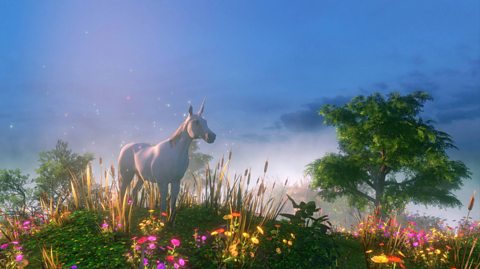
For example, a unicorn is traditionally depicted as a horse-like animal with a spiralling horn on its head. Some mythical creatures are hybrids, meaning they combine parts of real-life animals or humans.
For example, a centaur is a being with the upper body of a human and the lower body of a horse. Mythical creatures can sometimes have unique powers or be symbolic, like a unicorn which symbolises purity and power.
In various types of mythology, mythical creatures can embody good, be misunderstood or represent evil, being villainous in the stories.
What are the legendary mythical creatures?
There are countless legendary mythical creatures known across generations. Some are associated with certain cultures, whereas others have been widely referenced in different myths, as well as literature and modern media.
Here, we focus on a few famous mythical creatures you’ve likely heard of. As mentioned earlier, a unicorn is traditionally depicted as a horse-like animal with a spiralling horn on its head – but did you know it’s also the national animal of Scotland?
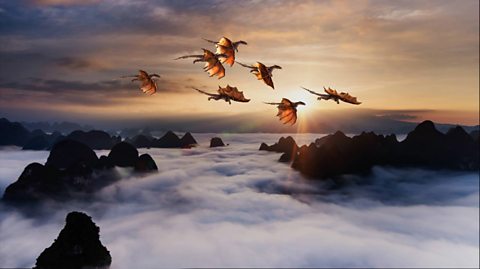
Dragons are also among the most well-known mythical creatures. In mythology, literature and modern media, they are usually depicted as incredibly large, winged reptiles that can breathe fire. They are likely inspired by real-life reptiles, and the name is also attached to the real life Komodo Dragon, the world’s largest living lizard.
In mythology, a phoenix is an immortal bird that symbolises rebirth and renewal. After living for 500 years, it consumed itself in flames and was then reborn from the ashes.
An aquatic mythical creature is a mermaid, which usually have the upper body of a woman and lower of a fish tail. In modern film and television, they can be depicted as good but more traditionally, they are portrayed as dangerous and evil, causing destruction in waters.
Another legendary creature is the griffon, a hybrid which has the head, wings and talons of an eagle and the body, tail and hind legs of a lion. You’ll have likely also heard of a sphinx, a hybrid which has a human head and the body of a lion.
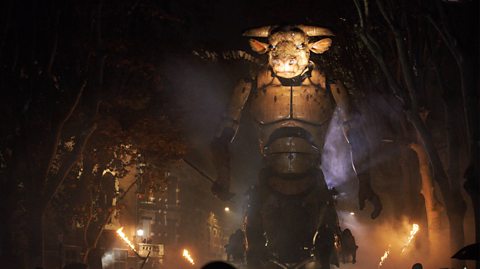
Famous creatures from Greek mythology include Medusa, the snake haired gorgon beheaded by Perseus and the Minotaur, a half man, half bull creature defeated by Theseus. There are many more to name, such as Cerberus, a three-headed dog and Pegasus, a winged horse.
In Norse mythology, there are tales of creatures like Sleipnir, an eight-legged horse ridden by god Odin. In Egyptian mythology, the Bennu bird is like the phoenix from Greek mythology, often described as its precursor.
In Japanese mythology, the Kitsune is a magical fox which can shape-shift. There is also the Oni, usually described as an ogre or troll-like creature.
Quiz: Can you guess these mythical creatures?
Which mythical creatures are famous in literature?
Mythical creatures are key characters in a lot of classic and modern literature. There are too many to name, but here are a few examples you’ll likely be familiar with.
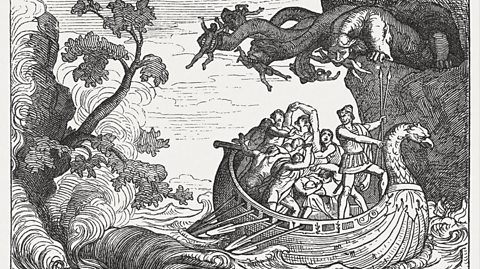
Still studied on the curriculum today, The Odyssey is an almost 3000-year-old epic poem by Homer, which has famously been retold by author Geraldine McCaughrean. Set in the world of the Ancient Greeks where gods, men and mythical creatures exist, the story follows the King of Ithaca Odysseus who is trying to return home after fighting in the Trojan War.
On his journey, he famously has many challenges along the way. This includes mythical creatures such as Scylla, a six-headed monster who eats some of Odysseus’ men.
Legendary actor, poet and playwright William Shakespeare was also known to frequent feature mythical, supernatural and fantastical creatures in his work. Fairies, which are also prominent in folklore and legend across numerous cultures, are often depicted as small, winged magical creatures which can be enchanting, represent nature or even be mischievous.
One famous example appears in Shakespeare’s A Midsummer Night's Dream, a comedy following “the confused relationships among four lovers, a conflict between a fairy king and queen and a group of amateur actors rehearsing a play." In the play, we meet fairies such as King Oberon, Queen Titania and Puck.
Vampires are also well-known mythical creatures, but author Bram Stoker’s Dracula is likely the most famous vampire character in history. The character is said to have been inspired by historic ruler Vlad Tepes.
In J.R.R. Tolkien’s The Hobbit, we also meet a dragon named Smaug and in C.S. Lewis’s The Chronicles of Narnia, one loved character is a faun called Mr Tumnus, who is half man half goat.
Which mythical creatures are famous in film and television?
Many of the mythical creatures and literary characters mentioned have also been adapted for film and television. From Disney classics to films that defined a generation like the Harry Potter franchise, fantasy teen shows and more, they continue to spotlight stories and characters known to generations.
In more recent years, we’ve seen them come more to life as technology and CGI (computer generated imagery) develop. With so many to choose from, we’ve decided to focus on a few coming to our screens in 2026.
Released in the UK in 2026, Luc Besson’s Dracula: A Love Tale is an adaptation focusing on the origins of Dracula and a centuries-long search for a lost love. Starring Caleb Landry Jones as Dracula, it is rated 15 in the UK.
On 17 July 2026, Christopher Nolan’s The Odyssey, an epic reimagining of Homer’s Greek poem, will hit cinemas. Bound to show a mythical creature or two along the way, the film will star Matt Damon as Odysseus, the Greek King of Ithaca, Anne Hathaway as Penelope, Tom Holland as Telemachus and Zendaya as Athena.
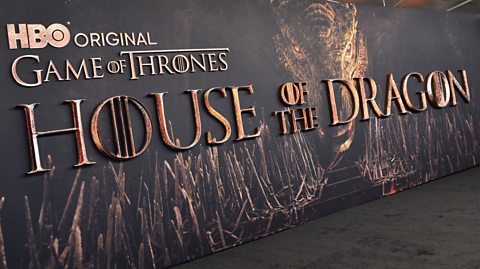
In 2026, the third season the House of the Dragon is also set to be released. The fantasy drama series, rated 18 in the UK by the British Board of Film Classification (BBFC), is a fantasy drama prequel to George R.R. Martin’s Game of Thrones.
This article was written in March 2026
