
Script Essentials 2026 Summary Notes - Session 4: How I Write & The Writing Life
Our wrap up notes for the fourth session in our 2026 Script Essentials Webinar series
Our fourth Script Essentials session was hosted by Karen Featherstone with writers Nk'iru. Njoku and Benjamin Bee talking about their writing process, how they deal with deadlines and organise their days as neurodivergent writers.
What is your favourite show or genre and why? Does it match the kind of things you like to write?
Ben:
- Ben’s favourite show is The Sopranos and his favourite genre is between watching what he describes as both terrible and amazing TV.
- Ben is fascinated by people and how they interact and the human struggle - how we’re all incredibly complex and different and all have our own individual struggles. He uses storytelling to understand what's going on in the world around him.
Nk’iru.:
- Nk’iru.’s favourite genre to write is comedy-drama and she has a broad taste in terms of viewing; thrillers, action and recently horror.
- Having never watched much horror, Nk’iru recently watched From (Sky) and is looking to add to her horror list.
Why do you write?
Ben:
- Ben says he overthinks everything and an element of that is being neurodivergent but most writers he talks to also overthink.
- He says that storytelling is part of survival to make sense of the world and that the hope is that somebody else says this is how I feel too. He writes to feel connected to people.
Nk’iru.:
- When Nk’iru. was growing up she enjoyed writing to play with life. She describes herself an introvert in her own world.
- When writing she thinks about life: what is, what could be, what was, and how can we have fun? How can we poke holes in things and people. She’s inspired by people watching and her family for characters.
How did you start writing?
Nk’iru.:
- When Nk’iru. was about 6 or 7 years old, she hadn’t visited England but wrote an entire book about her trip to London from her imagination, inspired by things she watched on TV and her parents’ anecdotes. She wrote fiction and poetry growing up and into adulthood.
- Nk’iru. then became an actor as a lead female of a Nigerian television soap which she describes as ‘very accidental’ but it gave her an opportunity to connect and talk to people making TV which led to writing opportunities.
Ben, when did you find writing, was it instinctive for you?
Ben:
- Writing wasn’t instinctive to Ben; he is dyslexic, his school reports described him as ‘bright, really naughty and he shouldn’t do anything to with English or writing’ and he was expelled from school at the age of 14.
- When technology changed and Ben began to use a screen reader and he started to make short films with his friends.
- He says it was still a struggle and didn’t write a longer form script until he was in his 30s.
- It took Ben a long time to realise that the ability to spell or the ability to use English language correctly doesn't equate to being a writer.
- He describes his journey to being a writer as horrible but it’s the only thing he enjoys doing.
Do you have writing routines, and how does being neurodivergent have an influence on that, for example, meeting deadlines?
Nk’iru.:
- Nk’iru. doesn’t have a strict routine routine, but if something is working she doesn’t question it. For instance in the last few months, she has been unravelling dreadlocks that she recently cut off in between writing. She writes one scene and thinks about the next as she occupies herself unravelling the hair and then writes another.
- She also uses the example of using chores to keep her busy whilst she thinks.
What did you think being a writer was going to be like compared to your experience of being a writer?
Ben:
- Ben says he thought writing would involve more writing.
- He spent a lot of time growing up looking for how the world works, and shortcuts for that, which he compares to the writing process.
- He thought that writing was being clever with words and being smart and having a big vocabulary and being able to spell.
- Ben also talked about elements of being a working writer that don’t feel inclusive as a neurodivergent writer e.g. going to parties to network and books which tell you to follow formulas.
- He says he didn’t realise that the value of being a writer is your voice, how you feel about the world and understanding that those have value and might resonate with other people.
- He thought that being a writer was a solitary thing but as writer you work with other brilliant people to make sure your work resonates with the biggest audience as possible.
Do production companies, commissioners or people who might hire you, have different expectations of you as a disabled writer e.g. do they expect you to be a different sort of writer or write about different topics?
Ben:
- Ben says there’s an expectation to tell stories about being disabled.
- He also talks about a view that neurodivergent people have communication differences but says that neurodivergent people can communicate really well with other neurodivergent people. Comparing it to an English person accepting that a French person speaks French.
- He says there can be a worry about offending people and a cautiousness of problematic disabled or neurodivergent characters, which means that you don’t get the most brilliant stories possible.
Nk’iru.:
- Nk’iru. says that she doesn’t think people know she’s neurodivergent unless she tells them. However, she does find that people want her to talk about her black experience or her immigrant experience.
- In terms of being a neurodivergent writer she says that often the tips given about how to succeed as a neurodivergent writer usually feel like tips on how to be neurotypical.
- Nk’iru. says that being neurodivergent means that she asks questions no one else is asking when working on something.
What sort of stories are missing or underrepresented at the moment?
Nk’iru.:
- Nk’iru. says she writes want she wants to see, as a mother of a disabled child she wants to tell stories of her experiences and what other people are experiencing that are funny, thought provoking and intriguing.
- Nk’iru. recently wrote an episode of Eastenders with the storyline of Lauren and her son Jimmy who was born visually impaired.
Ben:
- Ben says there’s an untapped market of disabled and neurodivergent stories.
- He says that everybody feels like an outsider and disabled and neurodivergent stories are about people who feel like outsiders.
- He talks about how many people are touched by disability. These stories resonate with a big untapped audience.
Script Essentials Additional Resources

My Writing Life with Neurodiversity
Writers, Kat Rose-Martin and Nk'iru. Njoku share how they deal with deadlines and organise their days whilst managing their neurodiversity.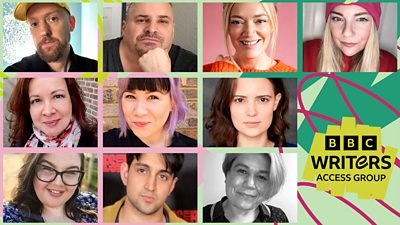
Learn more about our Writers Access Group
Lou Burns provides a summary of her experience as part of our Writers' Access Group
Learn About Medium and Format
Presenting your work appropriately suggests a professional approach and an understanding of the medium and format for which you are writing


Disabled and deaf-led organisations
- Access All Areas
- Beacon Films
- Birds of Paradise Theatre Company
- CRIPtic Arts
- DaDaFest
- Deaf and Disabled People in TV
- Deafinitely Theatre
- Disability Arts Cymru
- DYPSLA
- Extant
- Graeae
- Hijinx Theatre
- Hot Coals Productions
- Inevitable Foundation (US based but open to international entries)
- LumoTV
- Oska Bright Film Festival
- RespectAbility (US based but open to international applications)
- Shape Arts
- Triple C and DANC (the Disabled Artists Networking Community) including the Scotland Talent Directory
- Unlimited
- Vital Xposure Theatre Company
Latest blog posts
More blog postsSearch by Tag:
- Tagged with Writers Access Group Script EssentialsWriters Access Group Script Essentials
- Tagged with BlogBlog
- Tagged with 20262026
- Tagged with TipsTips
