Monday 24 March 2003 Geneva conventions on prisoners of war 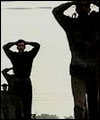 | The American Defence Secretary, Donald Rumsfeld, has condemned the sight of captured American soldiers being interviewed on Iraqi television. He said the interviews violated the Geneva Conventions on the treatment of prisoners of war. But what do the Conventions say, and how do they apply? This report from Alix Kroeger: |
 Listen to the story Listen to the story The Geneva Conventions say that prisoners of war must not be subjected to insult or public curiosity. Legal protections begin for PoWs at the moment of capture. Recognised prisoners of war have to be charged or repatriated at the end of a conflict. They're expected to give only their name, rank and number when questioned - and must be removed from the combat area as soon as possible so that they're not in danger.
Nearly two hundred countries have signed the conventions – including Iraq and the United States. The United States has itself been criticised for failing to apply the Conventions to prisoners of war captured in Afghanistan. Instead it declared them “unlawful combatants”.
Alix Kroeger, BBC Listen to the words Geneva Conventions agreements about how to treat people hurt or taken prisoner in war subjected to affected by PoWs prisoners of war Recognised prisoners of war people who are officially accepted as prisoners of war charged formally accused of having committed a crime repatriated sent back to their own country a conflict a war or battle the combat area the place where the fighting is taking place in a war to apply the Conventions to prisoners of war to use the Geneva conventions in relation to prisoners of war combatants people who take part in a fight or in a war  Read more about this story Read more about this story | |  | | | SEARCH IN LEARNING ENGLISH | | | |
|
|


