A short animation explaining the water cycle - including evaporation, condensation and precipitation.
Over two thirds of the Earth is covered in water.
Water is vital to support all life on the planet.
Water never leaves the Earth and its atmosphere.
It simply moves around in what is called the water cycle.
The water cycle is the continuous journey of water from oceans and lakes, to clouds, to rain, to streams, to rivers and back into the ocean again.
When the sun shines, it causes water to warm up, turning it into a gas - water vapour.
This process is called evaporation.
The water vapour rises and collects in the sky as clouds.
When the water vapour cools down, it condenses, turning back into liquid, and falls back to earth as precipitation: rain, snow, hail or sleet.
This water then moves across land as run-off, and ends up in rivers and streams.
It then flows back to the sea or lakes and the cycle starts again.
Water moves continuously around this cycle.
The water we use today has been around for as long as the Earth.
So next time you take a drink of water, remember, it's the same water the dinosaurs drank!
Video summary
A short animation for KS2 pupils explaining the water cycle - including evaporation, condensation and precipitation.
It follows the journey of water and how it starts in rivers, lakes and oceans, evaporates and condenses, then falls as precipitation and runs back into rivers, lakes and oceans.
The film illustrates the journey and will help pupils to visualise the continuous water cycle that is essential to life on Earth.
Teacher Notes
Download/print the Teacher Notes for this episode (pdf).
Teacher Notes prepared in partnership with the Geographical Association.
Central or big idea
- Water is constantly being recycled as it moves through the water cycle.
Think, work and apply like a geographer
- Sustainability
- Change
- Scale
- Interconnect
Questions to explore
- What is condensation?
- What is evaporation?
- What is precipitation?
- What is run-off?
- What do you think happens to rain water that soaks into the ground?
- Can you describe the water cycle?
- How does the water cycle affect you?
- How might climate change affect the water cycle?
Key learning outcomes
- Know that the water cycle is driven by the energy of the sun and is a ‘closed system’.
- Know how to explain the importance of the water cycle to life on Earth.
- Know how to summarise geographical information.
Suitable for teaching geography at KS1 and KS2 in England and Wales, Early and 1st and 2nd level in Scotland and Foundation and KS1 in Northern Ireland.
Key geographical vocabulary and definitions
- Evaporation
- Atmosphere
- Water vapour
- Precipitation
- Condense
- Gas
- Run off
Suggested learning opportunities
- Design an infographic that explains how water moves through the different stages of the water cycle.
- Make a water cycle in a bag and place it in the classroom window.
- Create a time lapse video of a puddle drying on the playground to show real world evaporation.
- Discuss: What if one element of the water cycle stopped happening? Explain: what the impact would be on life on Earth.
Ideas for going further and links
- Use knowledge of the water cycle and the equator to explain why some parts of the world are wetter than others, while other parts are drier than others?
- Using their knowledge of the water cycle, can pupils develop an enquiry into how climate change might impact on the water cycle, and how this could affect their lives?
KS1/KS2 Primary Geography: Weather, climate and climate change
KS2 Geography: Lakes, lochs, reservoirs and the water cycle
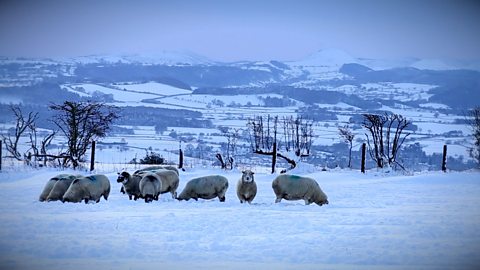
Weather, climate and climate change. video
Exploring the difference between weather and climate, climate zones around the world and climate change.
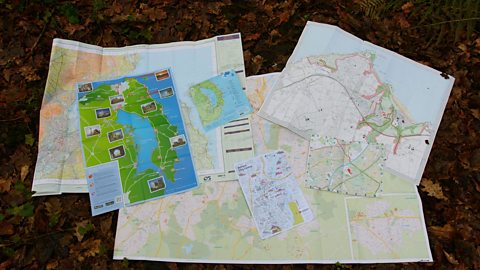
Maps. video
Maps, mapping and navigation - including map keys, symbols, compass points and co-ordinates.
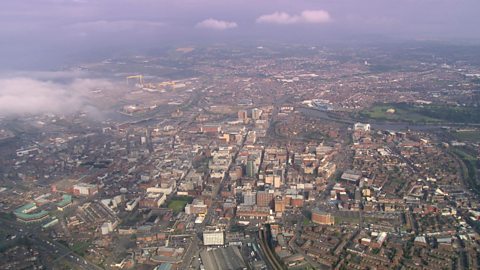
Cities, towns and villages. video
Exploring settlements to identify the key geographical features of villages, towns and cities, including their similarities and differences.
Rivers. video
Exploring the journey of water to the sea, including source, stream, river, meander, river mouth and estuary.
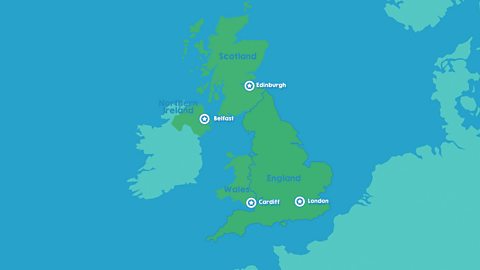
The United Kingdom. video
Identifying the four countries of the UK - England, Scotland, Wales, Northern Ireland - and their capital cities: London, Edinburgh, Cardiff, Belfast.
The world. video
Exploring the regions of the Earth: the continents, oceans, Equator, Northern and Southern Hemispheres and the North and South Poles.
The seasons. video
Spring, summer, autumn, winter... Identifying the four seasons of the United Kingdom's temperate climate.
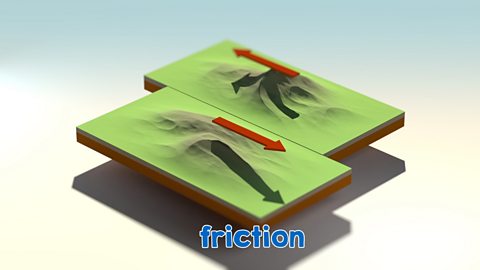
Earthquakes. video
An animation for KS2 pupils on tectonic plate movement and steps to lessen the impact of earthquakes.