'If it could happen to Annabel, it could happen to any of us'

 Family handout
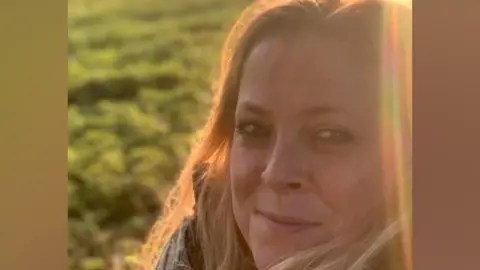
Annabel Rook had dedicated her life to protecting vulnerable women, yet her own life was ended violently by her controlling partner, in the home they shared together.
"I'm sure the irony is not lost on people," Annabel's father, Peter Rook, says.
"Because here she was, the great safeguarder of women. But who was safeguarding her, at her time of need?"
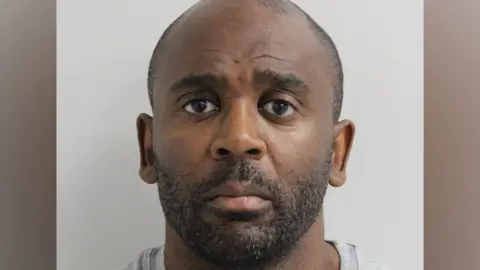
Annabel, 46, was stabbed 31 times by her partner of 10 years, Clifton George, at their home in Stoke Newington, north London, in June last year, after she had tried to end their relationship.
He had punched and tried to strangle her, and then started a fire that triggered a gas canister blast.
George, 45, was found guilty of murder following a trial at Snaresbrook Crown Court and on Tuesday was jailed for life with a minimum of 23 years.
Warning: This story contains distressing content and discussion of domestic abuse
Annabel's parents Peter and Susanna Rook, along with her childhood friend Catherine Milne, say the case highlights the complexity of recognising abuse and the heightened danger to women trying to leave a volatile partner.
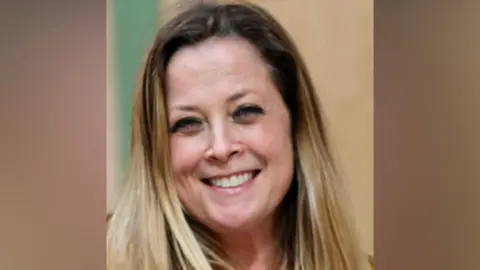
"She really was the most brilliantly funny, exuberant, hilarious, intelligent, compassionate person, and she was also incredibly dynamic and powerful, and if this could happen to her, it could happen to any of us," Milne says.
Milne had been friends with Annabel since the age of eight, and the pair had volunteered together in Ghana, before founding the group MamaSuze in Islington, which helps refugee and migrant women - some of whom have fled domestic violence - through art and drama.
"She was the leader of our community, and I wonder if somewhere that was also part of the reason her partner ended up hating her so much," says Milne.
"I think he really resented how loved she was, and how revered she was, and how adored she was, and that was actually part of why he wanted to destroy her."
 Family handout
Although George admitted manslaughter and arson, he denied murder, blaming the killing on a loss of self-control.
But Annabel's family and friends gave evidence to the jury of his aggressive bullying and angry outbursts over trivial matters.
By the end of the trial, the judge, Mr Justice Constable KC, had ruled that George's defence could not be relied on, thanks to "overwhelming" evidence of his short temper and a pattern of abuse.
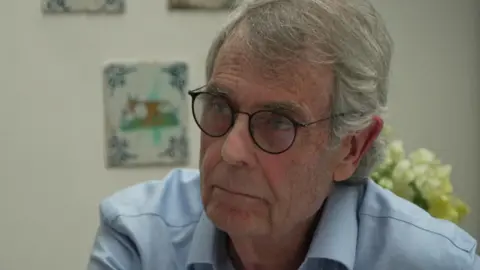
For Annabel's father Peter, a retired judge, the trial was a "gruelling" experience.
"I was a judge at the Old Bailey from 2005, for many years, and I've tried many homicide cases," he says.
"But of course I never thought that I'd be playing the role of a witness or indeed the father of the deceased in a murder case, and of course it gives one insight."
He praised the support from police, particularly their family liaison officer, but said it had "brought home just how terrible it is" for victims.
This included hearing some of the voice notes recorded by Annabel herself, played to the jury.
In one, Annabel described George becoming angry because she did not clean his knives properly.
"I can't not make him angry, it's always going to happen," she had said in the voice note.
Peter said that although this was "very difficult" for the family, it was "no doubt powerful evidence" for the jury to hear his daughter's voice.
'Red flags need to be noticed'
It was only during the trial that they learned the extent of George's controlling behaviour.
The jury heard that he would fat-shame and gaslight her.
"We knew he had a short fuse and would lose his temper over small things, but we never knew he was capable of physical violence," Peter says.
"And we've learnt how he used silence as one of his weapons," adds Susanna Rook, describing how George would "come home and not talk".
 Metropolitan Police
"Red flags need to be noticed," Peter explains.
"Which means that people should share information and people should react on information to prevent tragedies like this happening in the future."
According to the Home Office, a woman is killed on average every three days in the UK.
Peter says it is important to note that his daughter was murdered after she decided that it was time to leave George.
"Of course it's self-evident now that where a controller perceives that they're going to lose the person they control, that is when they can be their most dangerous."
Milne says that although she had become "increasingly concerned" about George's cruel behaviour, she did not think he was capable of physical violence and that Annabel would reassure her.
"Annabel was an incredibly strong woman, and she was very much in control of her own life," she says.
"She was not financially dependent on him. She had a flourishing career. She had loads of friends. She was an incredibly powerful, autonomous person.
"I don't think she realised how much danger she was in. I certainly didn't realise how much physical danger she was in."
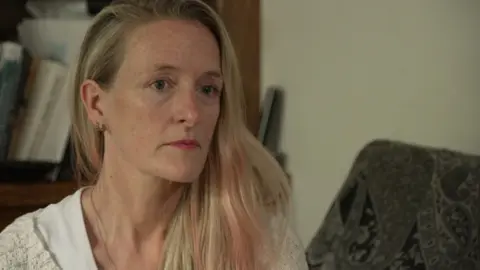
Susanna says the whole family have been "shattered" by her daughter's death.
"I think the best word that people have used to me is 'unfathomable'. It is unfathomable that this should have happened," she says.
At their kitchen table, she shares memories of Annabel's childhood and how her "joyful and funny" daughter had made friends wherever she went, including the women she helped support through the MamaSuze group.
"They were just heartbroken," Susanna says, remembering their reaction to hearing what had happened.
"'But she was an angel', they said to me."
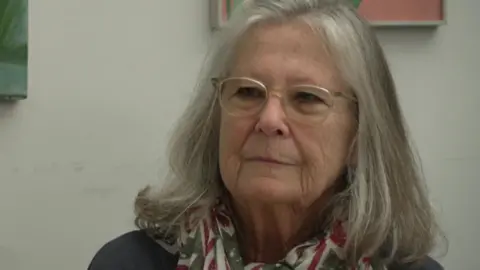
"We know that we'll never get over it, but obviously we will manage, and one of the reasons we will manage is because of her spirit," says Peter.
"Because we know she'd be saying, 'come on, don't curl up into a ball just because of me', and we also know that she wouldn't want her life defined by her death.
"She was determined to make life a better place for all these vulnerable women."
'We should all be outraged'
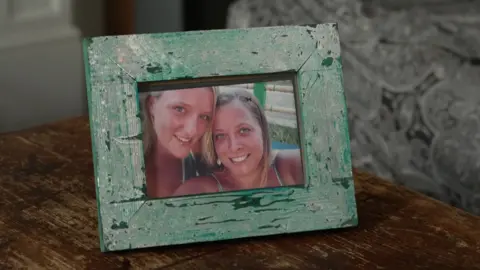 Family handout
"I imagine I'll spend the rest of my life missing her," Milne says.
"The flame of my life has definitely gone out in many ways."
She says she has been "given courage to carry on" by the "tenacious, brave, formidable women" who attend MamaSuze.
She believes Annabel's murder highlights why everyday misogyny and sexism must be tackled.
"I really think that all of us need to look at ourselves, at our relationships, at our friends, and really think about what it is in our society that is causing men to be so angry, so embittered, and so entitled, that if they feel powerless they want to kill us.
"We should all be outraged by this."
- If you have been affected by the issues in this report, information and support are available at BBC Action Line.
Listen to the best of BBC Radio London on Sounds and follow BBC London on Facebook, X and Instagram. Send your story ideas to hello.bbclondon@bbc.co.uk
